

Thickener (Water Recycling)
The Rockwell Crusher thickener recycles up to 90% of washing line water, replacing traditional ponds; available in three models with diameters of 8 to 12 meters. Suitable for sand and gravel, iron ore and copper mines. Built in the Rockwell Crusher workshop.
- Designed and built in the Rockwell Crusher workshop, Shahr-e Qods
- Fast spare parts supply
- Installation, commissioning and after-sales service
Thickener (Water Recycling)
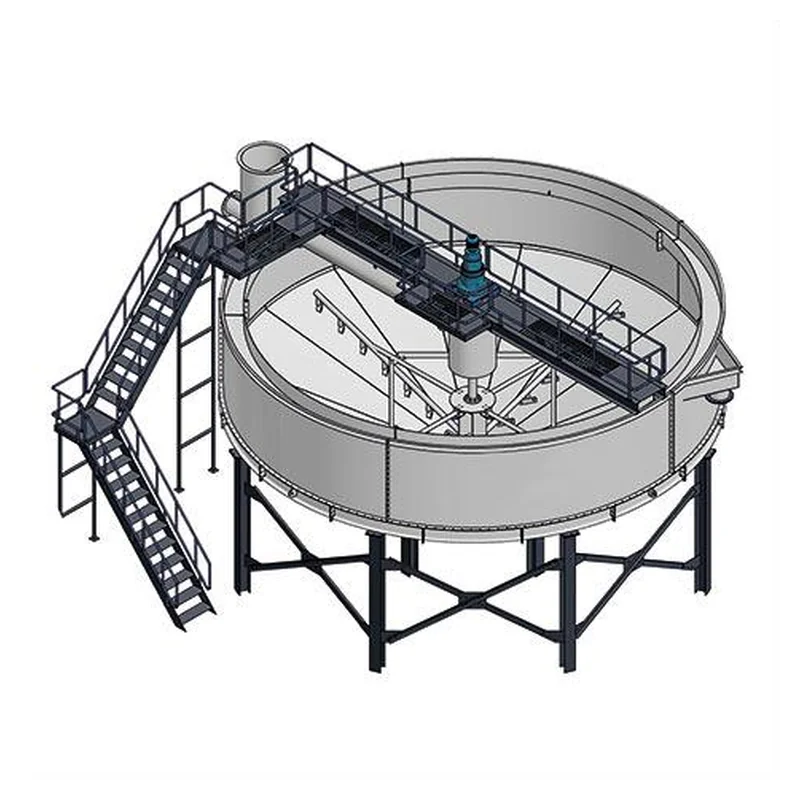
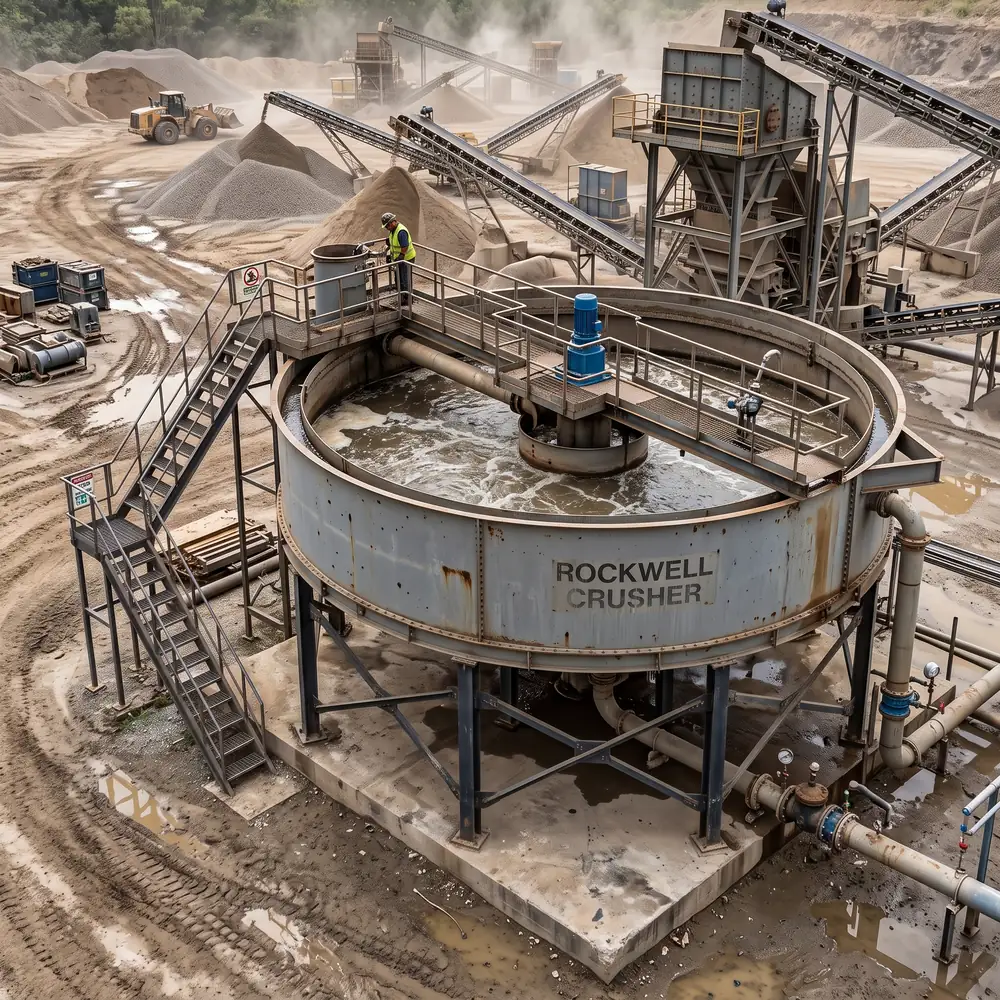
The Rockwell Crusher thickener recycles up to 90% of the water used in the washing line and returns it to the cycle. It replaces traditional settling ponds, meaning less water consumption, less space and a cleaner, safer site. The thickener is built in three models, with diameters of 8 to 12 meters.
Application
Water treatment and recycling in sand and gravel washing lines as well as iron ore and copper mines. Muddy water from the sand washers enters the thickener, its solids are separated, and the clear water returns to the washing line.
Made by Rockwell Crusher
This machine is fully designed and built in the Rockwell Crusher workshop in Shahr-e Qods. As a result, its spare parts are always available, and our technical team is there for you for installation, commissioning and after-sales service.
How Does a Thickener Work?
- Muddy water inflowMuddy water from the sand washers enters the thickener tank through the center.
- Settling of solidsMud and silt particles settle in the tank and sink to the bottom.
- Sludge collection and dischargeRotating rake arms slowly guide the settled sludge to the center of the tank floor, and a slurry pump removes it.
- Clear water returnClear water overflows from the top edge of the tank and returns to the washing line.
Rockwell Crusher Thickener Features
Up to 90% water recovery
Recycles up to 90% of the washing line’s water for a dramatic reduction in water consumption.
Suitable for all types of mines
Water treatment in sand and gravel, iron ore and copper mines.
Eliminates traditional ponds
No settling ponds needed — a cleaner, safer environment on the line site.
Environmentally friendly
Minimal civil works and full compliance with environmental requirements.
Quick, easy installation
Installation and commissioning in the shortest possible time.
Lower maintenance costs
Less maintenance and lower costs compared to traditional washing systems.
Technical Specifications Table
| Model | Diameter (m) | Max. capacity | Output (t/h) | Slurry pump type | Slurry pump power (kW) | Empty weight (t) | Full weight (t) | Power consumption (kW) |
|---|---|---|---|---|---|---|---|---|
| TKA | 12 | 800 | 40 | 6/4 | 22 | 32 | 400 | 4 |
| TKB | 10 | 600 | 30 | 6/4 | 25 | 25 | 270 | 4 |
| TKC | 8 | 400 | 20 | 4/3 | 20 | 20 | 200 | 3 |
Why a Thickener Instead of Ponds? Settling ponds take up a lot of land, lose a large part of the water and are expensive to dredge. A thickener just a few meters in diameter does the same job in a small footprint and returns up to 90% of the water to the line — a major advantage in water-scarce regions.
General Specifications
Read more: The water entering the thickener usually comes from the spiral sand washer and other sand washers. To learn why sand washing matters, read our article What Is Washed Sand? .
Thickener Price Inquiry
For pricing and advice on choosing the right model for your washing line, contact Rockwell Crusher’s experts.