



Blog
What Is a Roll Crusher? Applications and Comparison with Other Crushers

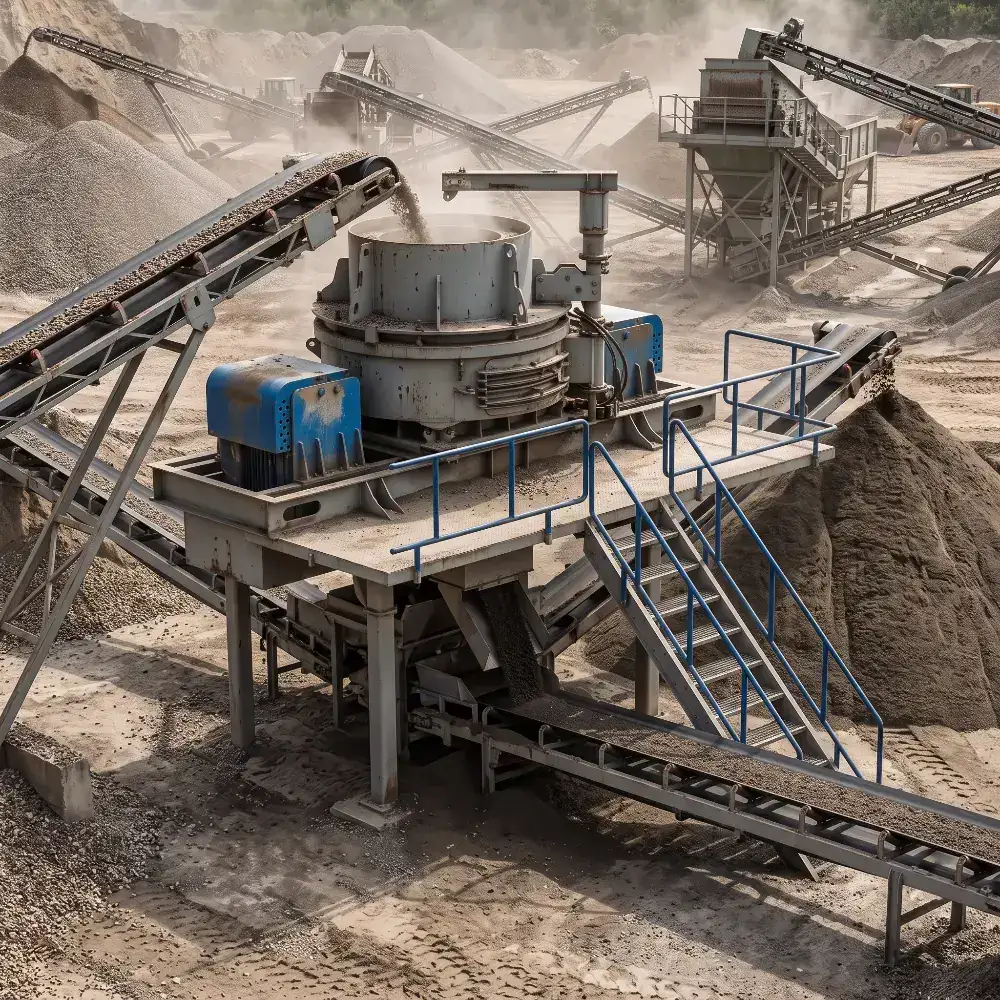
A roll crusher is a machine that squeezes and crushes rock between two steel rolls rotating in opposite directions. It is mainly used for secondary and tertiary crushing of medium-hard and soft materials and, alongside jaw, cone and impact crushers, is one of the options when designing a production line. In this article we look at the structure, working principle, applications and limitations of the roll crusher, and explain when it is better to choose a different machine.
Roll Crusher or Rockwell Crusher? Don’t confuse the two: “roll crusher” is the name of a type of machine, while Rockwell Crusher is the name of a company that manufactures crushers and equipment for sand and gravel lines. To see Rockwell Crusher’s products, visit the products page.
How Does a Roll Crusher Work?
In a roll crusher, rock is fed from above between two rolls. Rotating inward, the rolls draw the rock into the gap between them and crush it by compression. The product size is determined by the gap between the two rolls; one roll is usually mounted on springs or a hydraulic system so that if an uncrushable object (such as a piece of iron) enters the machine, the roll moves back and the machine is not damaged.
Types of Roll Crushers
- Smooth double-roll crusher: the most common type, for finer crushing and a uniform product.
- Toothed roll crusher: the roll surface has teeth or spikes and breaks rock by a combination of compression and shearing; suitable for softer, coarser materials such as coal.
- Single-roll crusher: rock is crushed between one roll and a fixed plate; mostly for soft materials.
- Four-roll crusher: two pairs of rolls in series, to achieve a finer product in a single machine.
Which Industries Use Roll Crushers?
- Crushing limestone, coal, cement clinker and medium-hard minerals
- Producing sand and fine aggregates at low and medium capacities
- Laboratories and small processing plants
- Cases where fines (powder) production must be kept low
Advantages and Limitations of Roll Crushers
| Advantages | Limitations |
|---|---|
| Simple structure and relatively easy maintenance | Low reduction ratio (usually about 3:1 to 4:1) |
| Fewer fines and uniform grading | Heavy roll wear with hard and abrasive rock |
| Low height and easy installation | Lower capacity than cone and impact crushers |
| Suitable for wet and semi-sticky materials | Requires even feeding across the full width of the rolls |
Roll Crusher or Other Crushers? Which One to Choose?
In most sand and gravel lines in Iran, where hard quarry rock or river cobbles are crushed, the roll crusher is not the first choice because of heavy wear and limited capacity. The following combination usually gives better results:
- Stage one (primary crushing): a jaw crusher to break large quarry rocks
- Stage two: a cone crusher or gyratory crusher for hard rock, or an impact crusher for softer rock such as limestone
- Sand production: a VSI crusher, which produces cubical sand suitable for concrete
For a full comparison of these machines, read the jaw, cone and impact crusher selection guide. If you want to set up a complete line, see the suggested layouts on the sand and gravel production lines page.
Roll Crusher FAQ
What is a roll crusher?
A roll crusher is a machine that squeezes and crushes rock between two steel rolls rotating in opposite directions, mainly used for secondary crushing of medium-hard materials.
Is a roll crusher suitable for hard rock?
With very hard and abrasive rock such as granite and basalt, the rolls wear quickly. In that case a cone or gyratory crusher is the more economical choice.
What is the difference between a roll crusher and Rockwell Crusher?
A roll crusher is a type of crushing machine, whereas Rockwell Crusher is the name of a company that manufactures crushers and equipment for sand and gravel production lines.
For sand production, is a roll crusher or a VSI better?
A roll crusher produces few fines but its capacity is limited. For high-capacity concrete sand production, a VSI crusher usually gives more cubical grading and greater capacity.
Crusher Selection Consulting
For free advice on choosing the right crusher and an up-to-date price, contact Rockwell Crusher’s experts.