




Blog
What Is Washed Sand and Why Does Concrete Quality Depend on It?

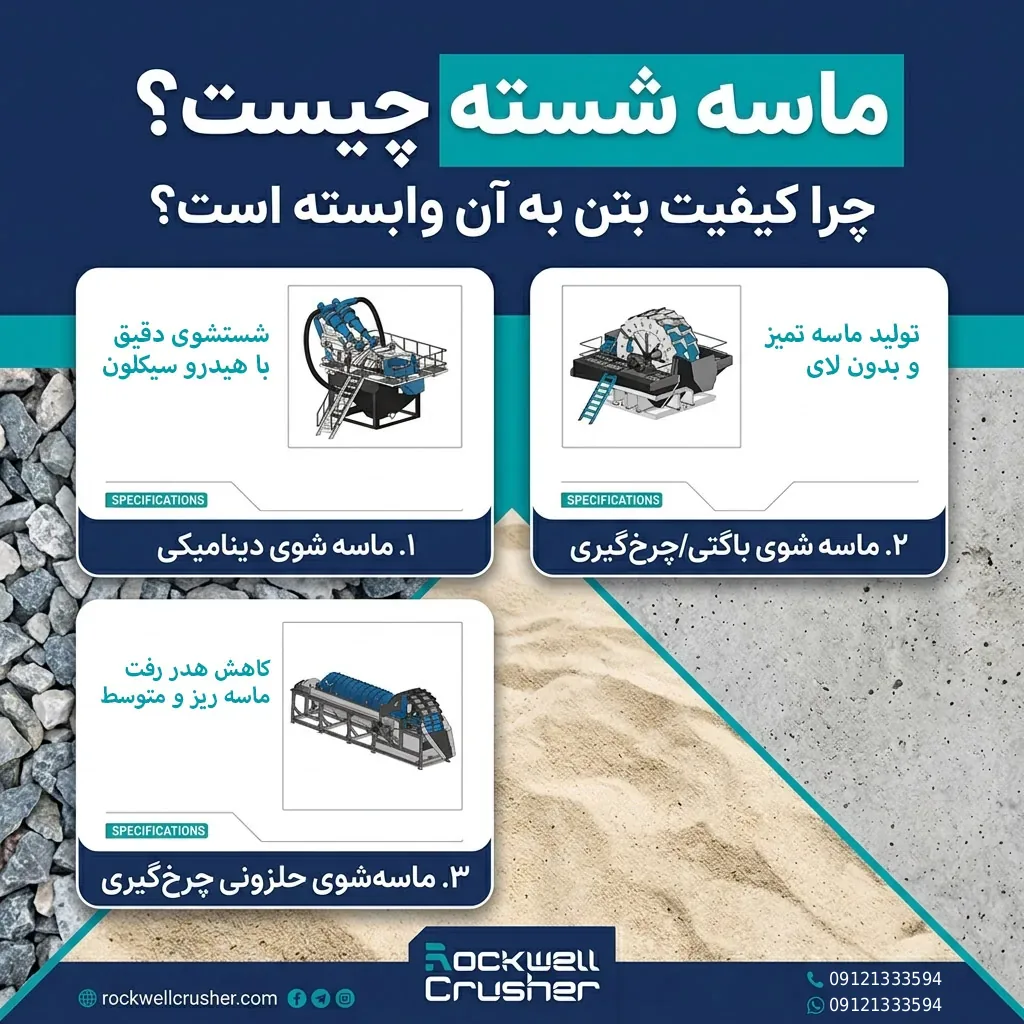
After cement, sand is one of the main components of concrete. But not every sand is suitable for concrete. Sand taken from a quarry or a riverbed usually contains some mud, silt, clay and dust. These seemingly minor impurities can seriously reduce the strength and durability of concrete. In this article we explain what washed sand is, why concrete quality depends on it and how it is produced.
What Is Washed Sand?
Washed sand is sand that has been washed with water using special machines to remove very fine particles and impurities. These include silt and clay (particles finer than 75 microns), dust from rock crushing, and organic matter such as plant roots.
The result is clean sand with controlled grading, whose grain surfaces are free and uncoated by mud. This clean surface is the key to good bonding between the sand and the cement paste.
Why Does Concrete Quality Depend on Washed Sand?
Impurities in sand damage concrete in several ways:
1. Reduced bonding and strength
A thin layer of mud and clay around the sand grains acts like a separating coating and prevents the cement paste from bonding directly to the grains. The result is a weaker bond and lower compressive strength of the concrete.
2. Higher water demand
Very fine particles have a large surface area and absorb a lot of water. To reach the required workability, more water must be added to the mix. A higher water-cement ratio is one of the main causes of reduced concrete strength; and if more cement is used to compensate, production costs go up.
3. Cracking and reduced durability
Concrete made with impure sand usually shrinks more and is more prone to surface cracks. These cracks open a path for water and harmful substances to penetrate and shorten the life of the structure.
4. Disrupted cement setting
Organic matter in impure sand can interfere with the chemical reactions of cement and slow down or prevent the proper setting and hardening of concrete.
Washed Sand
- Strong bond with cement paste
- Higher compressive strength
- Lower water demand in the mix
- Consistent quality in every batch
- Cleaner finished surface and fewer cracks
Unwashed Sand
- Mud and clay coating around the grains
- Reduced concrete strength and durability
- Needs more water or cement
- Variable, unpredictable quality
- Higher risk of cracking
What Do the Standards Say About Concrete Sand?
Recognized standards for concrete aggregates, such as Iranian National Standard No. 302 and the American standard ASTM C33, set a specific limit on the amount of particles finer than 75 microns in sand, which is usually only a few percent of the sand’s weight. Sand with more fines than this limit is not suitable for structural concrete.
One of the common tests for measuring sand cleanliness is the Sand Equivalent test, which shows the ratio of clean sand to clay particles and is carried out in materials laboratories.
A simple on-site test: fill a clear glass jar halfway with sand, add water and shake it vigorously. After a few hours the sand settles and a layer of mud and silt forms on top. The thicker this layer, the more impure the sand. This method does not replace a standard test, but it gives you a good first picture of the sand’s quality.
How Is Washed Sand Produced?
In a washed sand production line, after crushing and screening, the material goes through these stages:
- Crushing and sand makingRock is crushed in crushers, and a VSI crusher is used to produce sand with cubical grains.
- Screening with a vibrating screenThe screen separates the material by size and sends the sand to the washing section.
- Washing in a sand washerThe sand is mixed and agitated with water to separate the mud and silt, then dewatered and discharged.
- Wash water recyclingThe muddy water goes to a thickener and filter press to separate the mud, and the clean water returns to the production cycle.
Types of Sand Washers
| Sand washer type | How it works | Main feature |
|---|---|---|
| Spiral sand washer | A steel spiral agitates the sand in water and lifts it up | Simple and robust; suitable for separating soil and mud |
| Bucket wheel sand washer | A large wheel with buckets scoops the sand out of a water tank | Produces clean, silt-free sand with good dewatering |
| Spiral bucket wheel sand washer | Combination of a spiral and a bucket wheel | Reduces loss of fine and medium sand; suitable for mud stuck to gravel |
| Dynamic sand washer | A pump and hydrocyclone separate the fine particles | Precise washing with wear-resistant polyurethane surfaces |
Water Recycling: Cost Savings and Environmental Responsibility
Sand washing consumes a lot of water. In traditional methods, muddy water was released into large ponds — a method that takes up a lot of land and wastes water. Today, with a thickener and a filter press, most of this water is returned to the production cycle.
Rockwell Crusher thickeners recycle up to 90% of the water used in a washing line; that means lower water consumption, no settling ponds, and a cleaner, safer work environment.
The filter press also separates water from the settled mud and turns it into a solid cake that is much easier to transport and dispose of than liquid mud.
Where Is Washed Sand Used?
- Structural concrete in buildings, bridges and dams
- Ready-mix concrete plants and precast concrete products
- Mortar, plastering and facade rendering
- Block and tile production
For sand and gravel producers, adding a washing section to the production line is not just a quality improvement — it is a competitive advantage. Washed sand usually sells at a higher price, and professional buyers such as ready-mix concrete plants prefer it.
Setting Up a Washed Sand Production Line?
Rockwell Crusher designs and manufactures spiral, bucket wheel and dynamic sand washers, thickeners and filter presses. Based on your material type and required capacity, our experts will recommend the right washing line.