



Blog
Hydrocone Mantle and Concave: Material, Types, Replacement Time and Buying Tips

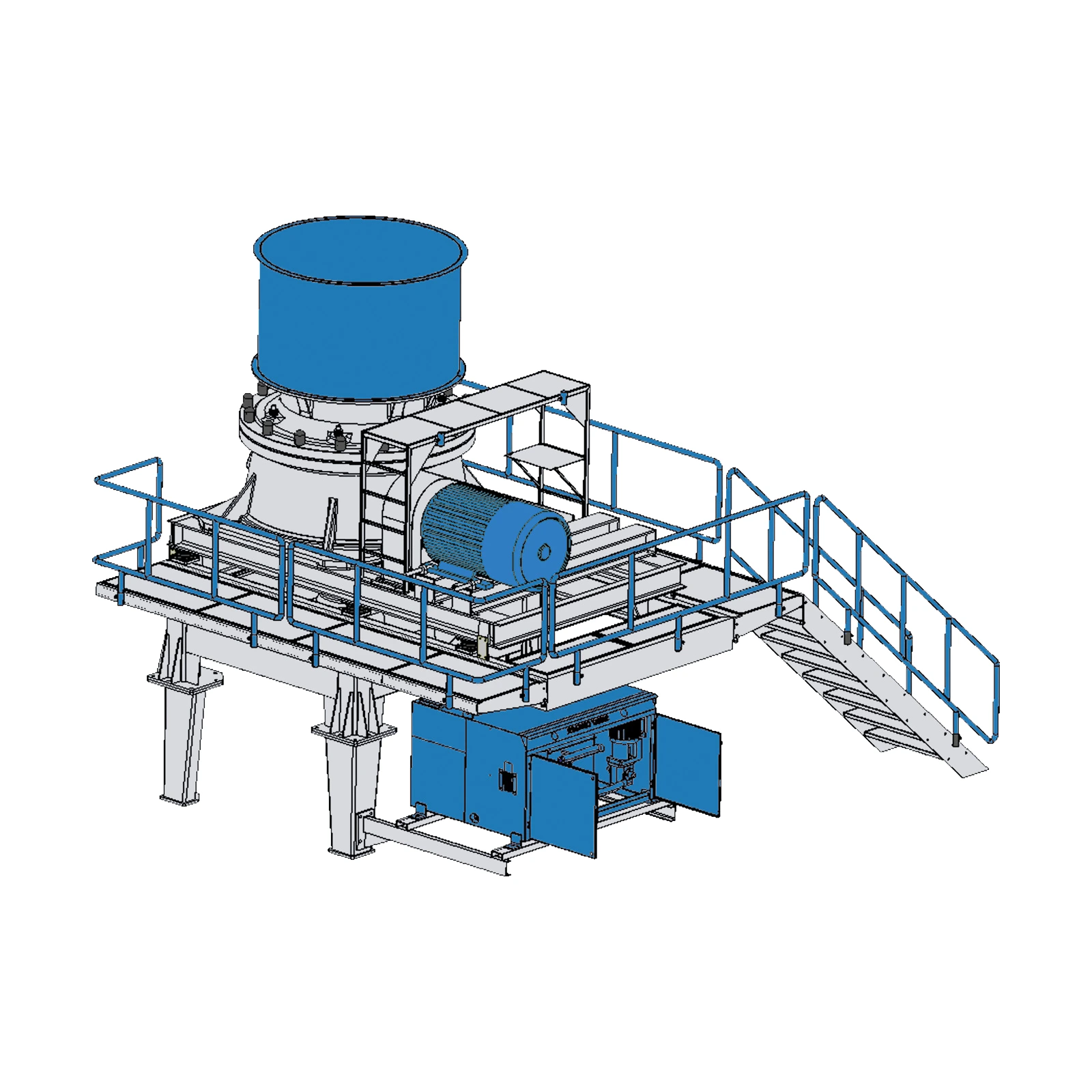
The hydrocone mantle and concave are the most important wear parts of a hydraulic cone crusher. Their quality, material and replacement timing directly affect capacity, product gradation and cost per ton. This article explains what the mantle and concave are, what they are made of, when to replace them and what to check when you buy them. If you are new to the machine itself, start with our article What is a hydrocone (hydraulic cone crusher)?
What Are the Hydrocone Mantle and Concave?
In a hydrocone, rock is squeezed and crushed between two metal surfaces. The mantle is a cone-shaped shell fitted on the head of the main shaft that moves with its eccentric motion. The concave (or bowl liner) is a ring-shaped shell fixed inside the top shell. The gap between the two at the bottom of the chamber, the CSS, sets the product size.
The mantle and concave are consumables: they are designed to wear so that the frame, shaft and other expensive parts are not damaged. That is why these two parts make up a large share of a hydrocone’s maintenance cost.
| Feature | Mantle | Concave |
|---|---|---|
| Location | On the head of the main shaft | Inside the top shell |
| Motion | Eccentric gyration | Fixed |
| Shape | Conical | Ring (bowl) shaped |
| Fastening | Head nut and lock on the shaft | Bolts and backing compound behind the liner |
| Wear pattern | Mostly at the lower part | Mostly in the middle and lower zone |
Mantle and Concave Material
Mantles and concaves are usually made of austenitic manganese steel (Hadfield steel). Its key property is work hardening: the surface gets harder with every impact and squeeze of the rock, while the core stays tough and does not crack. The common grades are:
| Common grade | Approx. manganese content | Best suited for |
|---|---|---|
| Mn13 / Mn14 | 12–14% | Medium-hard, low-abrasion rock such as limestone |
| Mn18 | 16–19% | The most widely used grade; granite, river gravel and hard rock |
| Mn22 | 20–23% | Very hard, abrasive rock and heavy impact |
Some chromium is usually added to these grades to improve wear resistance. Manganese content alone is not enough: casting quality and heat treatment (austenitizing and water quenching) decide how long the part lasts in real work.
How Mantles and Concaves Are Made
- Profile design: the shape of the mantle and concave is designed for the chamber type (coarse, medium or fine) and the crusher model.
- Casting: manganese steel with a controlled analysis is poured into the mold.
- Heat treatment: the part is heated to a high temperature and then quenched in water to obtain the austenitic structure and toughness it needs.
- Machining: seating and mating surfaces are machined accurately so the part sits exactly on the crusher.
- Quality control: chemical analysis, hardness and dimensions are checked before delivery.
Liner Profiles and Chamber Types
Changing the mantle and concave changes the hydrocone’s crushing chamber. Coarse profiles have a larger feed opening and suit secondary crushing; fine profiles are used for fine aggregate and sand-maker feed. For example, the Rockwell Crusher 45-inch hydrocone has five chambers:
| Chamber | Total capacity (t/h) |
|---|---|
| EC (extra coarse) | 250 |
| C (coarse) | 220 |
| M (medium) | 220 |
| F (fine) | 170 |
| EF (extra fine) | 150 |
What Determines Mantle and Concave Life?
- Rock abrasiveness: siliceous and granitic rock wears liners faster.
- Feeding: choke, even feeding spreads wear over the whole liner. Low or one-sided feed causes local, uneven wear.
- Fines in the feed: a lot of fines increases wear without doing useful work.
- Correct chamber choice: if the feed is too coarse or too fine for the chamber, only part of the liner works and it wears out early.
- Steel grade and build quality: the wrong grade or poor heat treatment cuts liner life sharply.
- Tramp iron: metal pieces cause heavy impacts and crack the liners.
When Should the Mantle and Concave Be Replaced?
The main signs that the mantle and concave need replacing are:
- A clear drop in capacity despite sufficient feed
- A coarser product, even after resetting the CSS hydraulically
- Liner thickness reaching the manufacturer’s minimum
- Cracks, breakage or loss of the backing compound behind the liner
- A loose mantle on the shaft head or abnormal knocking
The best practice is to measure and record liner thickness regularly. That way you can plan the change in advance and have the spare part ready before the plant stops.
How to Replace the Hydrocone Mantle and Concave
- Make it safe: isolate and lock out the power and release the hydraulic pressure.
- Remove the top shell: take off the hopper and spider and lift out the top shell with the concave.
- Replace the mantle: undo the head nut and remove the worn mantle. Clean the seat, then fit and tighten the new mantle.
- Replace the concave: remove the worn concave from the top shell and fit the new one with its bolts and backing compound.
- Reassemble and adjust: refit the top shell and spider and set the CSS with the hydraulic system.
- Test run: run the crusher empty first, then check it under full load.
This job needs lifting equipment and experience. A badly fitted mantle or concave can damage the shaft and frame.
Tips for Buying Hydrocone Mantles and Concaves
- Specify the exact crusher model and chamber type so the right profile is made.
- Choose the steel grade according to the hardness and abrasiveness of your rock.
- Ask about chemical analysis, heat treatment and quality control.
- Check the accuracy of the seating dimensions; a part that does not sit properly soon works loose or cracks.
- Order in advance for planned shutdowns.
Mantles and Concaves Made by Rockwell Crusher
Besides building the 36-inch hydrocone and the 45-inch hydrocone, Rockwell Crusher makes hydrocone spare parts, including mantles and concaves, in its own workshop. Because we design and build both the machine and the parts, they are supplied with accurate dimensions, quickly and without middlemen. For a mantle and concave quotation, send us your crusher model, chamber type and rock type. For service and repairs, see our article on hydrocone repair.
In many sand plants, the hydrocone output goes to a rock-on-rock crusher (VSI sand maker) to produce sand with cubical particles. Besides hydrocone parts, Rockwell Crusher also makes the rotor and spare parts for its rock-on-rock crushers in its own workshop. Call us on +98 912 133 3594.
Hydrocone Mantle and Concave FAQ
What is the difference between the hydrocone mantle and concave?
The mantle is the wear liner on the moving cone (the head of the main shaft), and the concave is the wear liner inside the top shell. Rock is squeezed and crushed between these two parts.
What are hydrocone mantles and concaves made of?
Usually austenitic manganese steel (Hadfield steel) with about 13 to 22 percent manganese and some chromium. The right grade depends on how hard and abrasive the rock is.
How long do hydrocone mantles and concaves last?
There is no fixed figure. Life depends on rock abrasiveness, chamber type, CSS, feed quality and steel quality. Choke, even feeding and the right grade extend liner life noticeably.
Should the mantle and concave be replaced together?
Not necessarily. Depending on the wear pattern, the mantle is sometimes replaced before the concave. Measure the thickness of both regularly to find the best time to replace each one.
Can the hydrocone chamber be changed by changing the liners?
Yes. Fitting a mantle and concave with a different profile changes the crushing chamber from coarse to fine or the other way round; for example, the Rockwell Crusher 45-inch hydrocone has five chambers from EC to EF.
Does Rockwell Crusher make hydrocone mantles and concaves?
Yes. Rockwell Crusher makes mantles, concaves and other hydrocone spare parts in its own workshop and supplies them for its 36-inch and 45-inch hydrocones and similar models.