




Blog
What Is a Rock on Rock Crusher? Complete Guide to the VSI Sand Maker: How It Works, Models and Price

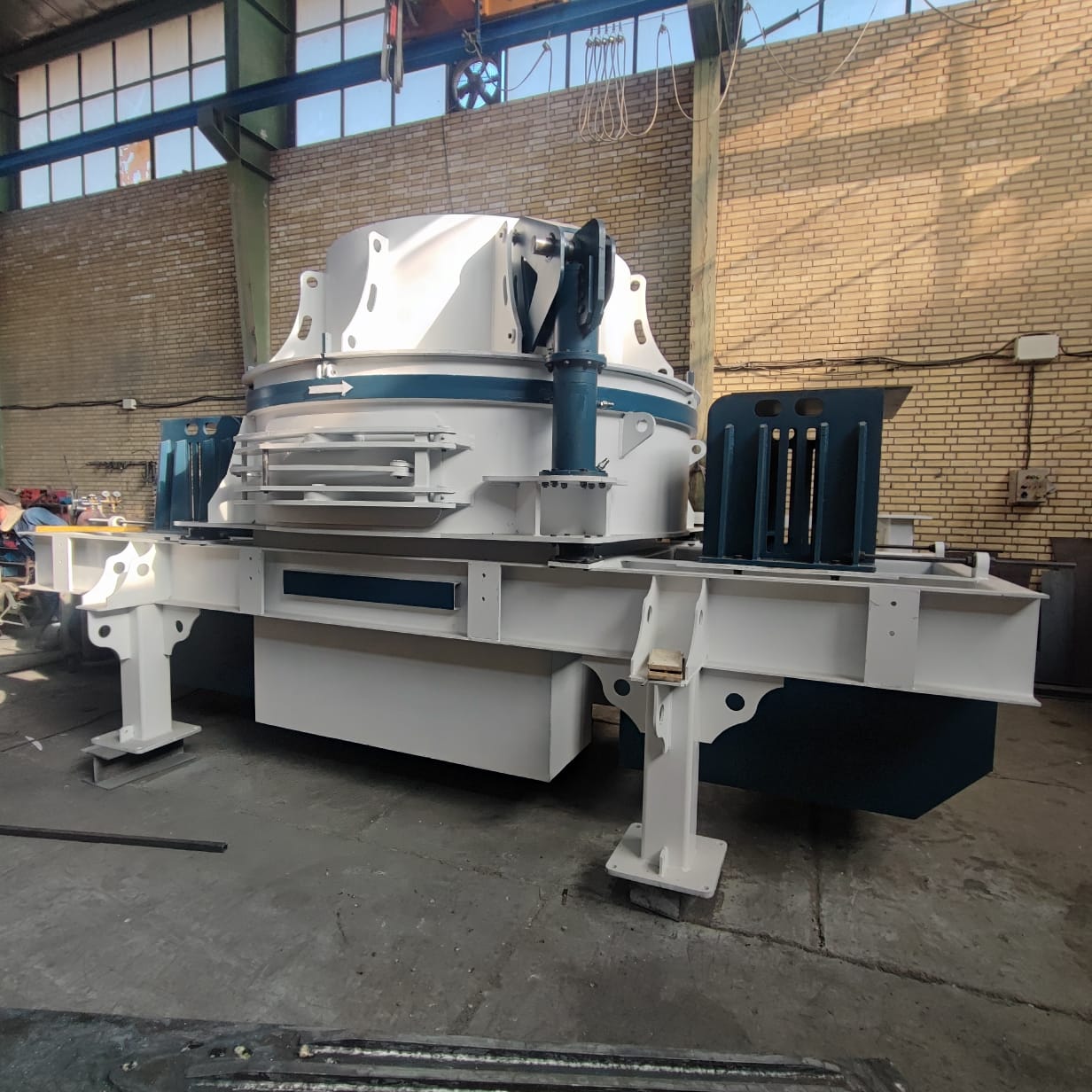
A rock on rock crusher (rock-on-rock VSI) is a vertical shaft impact crusher that throws stone at very high speed against a bed of stone. The result is high-quality manufactured sand and cubical aggregate with minimal wear on metal parts.
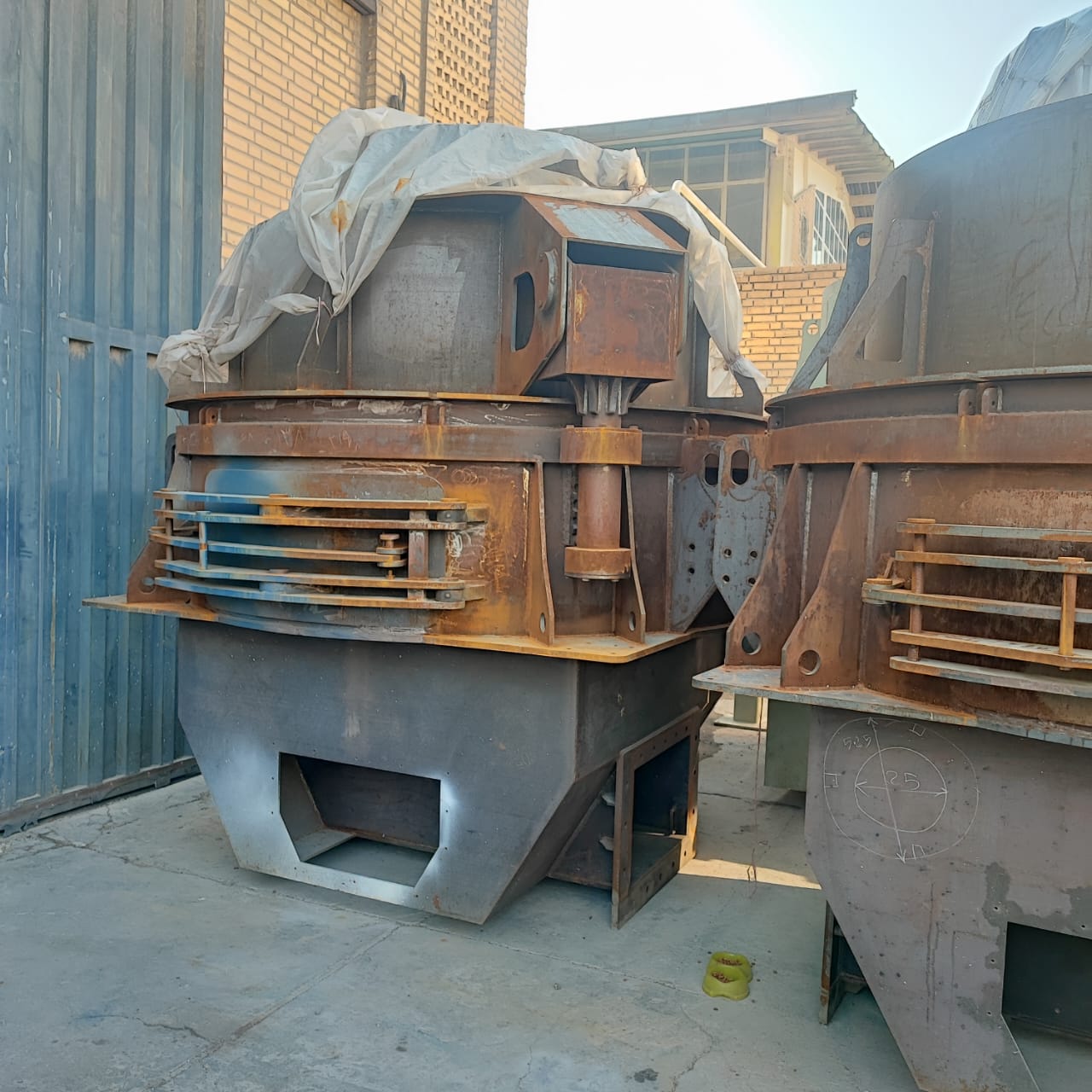
This guide covers everything: how it works, its parts, rock-on-rock vs rock-on-anvil, models and technical specifications, price factors and buying tips. It is based on Rockwell Crusher’s experience building several rock on rock machines in our own workshop.
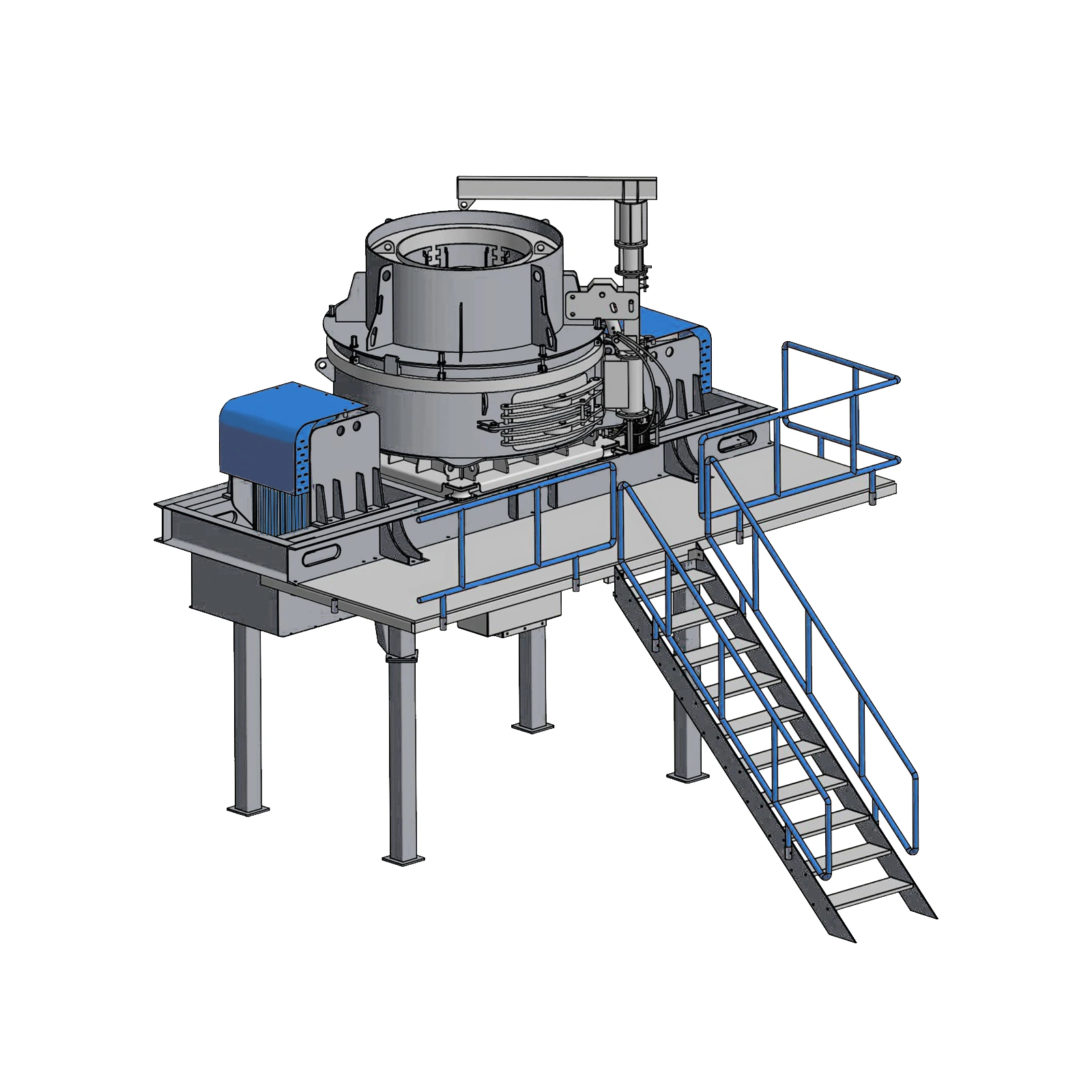
The article in a few lines
- Main job: producing manufactured sand (0–6 mm) and reshaping aggregate into cubical grains.
- Principle: a fast-spinning rotor throws the stone, which hits a layer of stone built up on the chamber wall and breaks.
- Place in the plant: third or fourth crushing stage, usually after a cone crusher (hydrocone).
- Key advantage: low wear-part cost, cubical grading and sand suitable for concrete and asphalt.
- Rockwell Crusher models: VSI-900, VSI-800 and the VSI 1 to VSI 3 models.
What is a rock on rock crusher?
A rock on rock crusher is a type of vertical shaft impactor, or VSI. A rotor mounted on a vertical shaft throws material at high speed toward the chamber wall. That wall is not metal: during operation, a layer of the stone itself builds up on it, called the rock shelf. The thrown stones hit this layer, which is why the machine is called “stone on stone”, or rock on rock.
Because most of the crushing comes from stone hitting stone rather than steel, wear on metal parts is very low. The sand it produces has cubical, angular grains, exactly what ready-mix concrete plants, asphalt producers and road projects need.
Other names for the rock on rock crusher
The machine is known by several names. They all refer to more or less the same equipment:
- Rock on rock, rock-on-rock VSI
- VSI crusher, VSI sand making machine, sand maker
- Vertical shaft impact crusher, vertical shaft impactor
- In some plants: “Barmac” (after the original brand)
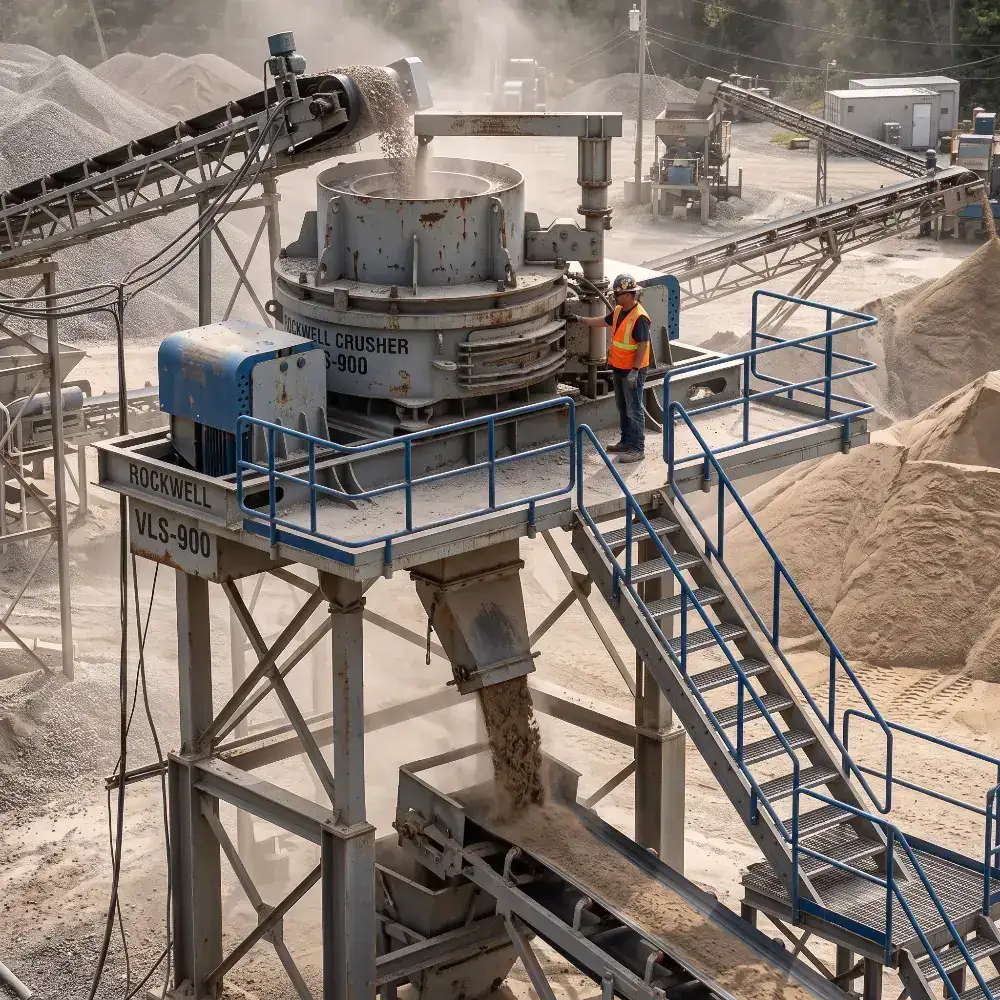
How does a rock on rock crusher work?
The process looks simple, but every stage directly affects sand quality. This is the path of the stone from entry to exit:
- Feeding: fine aggregate (usually up to 40–45 mm) enters the feed tube from the hopper on top.
- Splitting the flow (cascade): most of the material enters the rotor. Part of it can fall around the rotor like a waterfall; this is called the cascade.
- Acceleration in the rotor: the rotor spins fast and throws material out of its ports at a tip speed of about 45 to 75 m/s.
- Impact on the rock shelf: stones hit the stone layer on the chamber wall and break. At the same time, particles in the air collide and abrade each other. This is autogenous crushing.
- Discharge and screening: the product leaves from the bottom and goes to a vibrating screen. Oversize grains return to the crusher.
🧮 Rotor tip speed calculator
Rotor tip speed is the most important number in rock-on-rock crushing. Higher speed means finer sand, but also more power use and wear. Enter the rotor diameter and speed:
Rock on rock vs rock on anvil
VSI crushers usually work in one of two modes. In rock on rock, stone hits the rock shelf. In rock on anvil (rock on iron), a ring of metal anvils is fitted around the chamber and the stone hits metal. Each has its use:
| Feature | Rock on rock | Rock on anvil |
|---|---|---|
| Impact surface | Self-forming rock shelf | Ring of metal anvils |
| Wear-part cost | Low | Higher (anvils wear) |
| Reduction ratio | Medium | Higher |
| Fines production | Good | More |
| Grain shape | Very cubical | Cubical |
| Best for | Abrasive stone such as river gravel and granite | Less abrasive stone and more fines required |
Main parts of a rock on rock crusher
Rotor
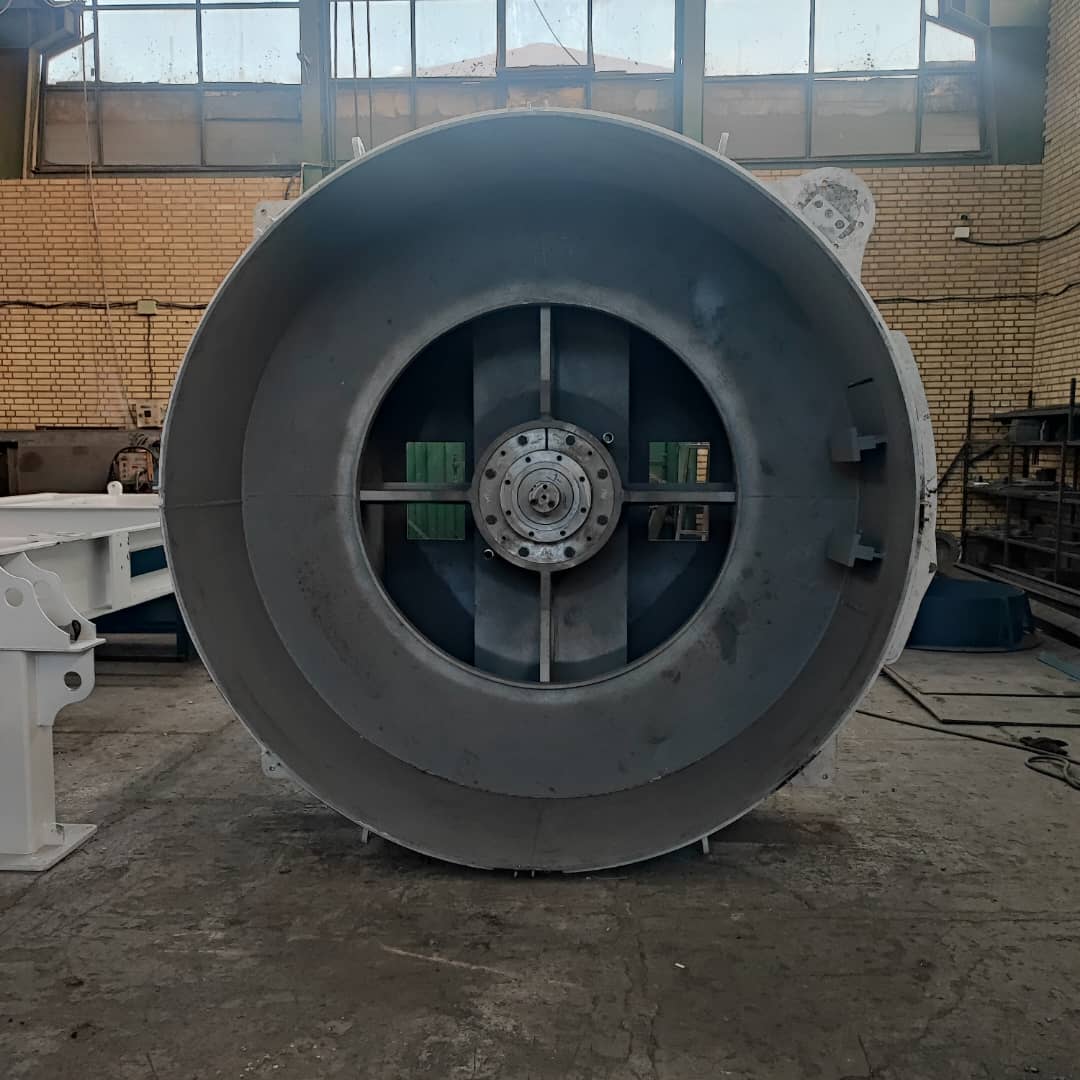
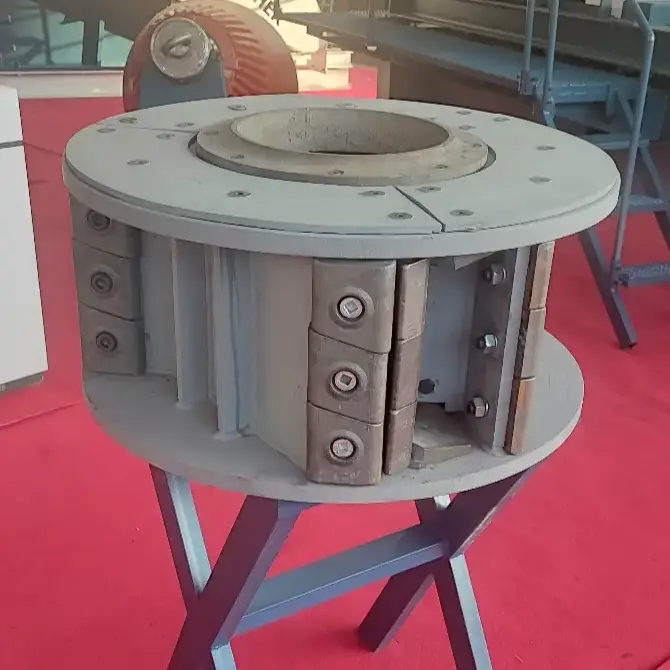
The heart of the machine: it accelerates and throws the material. Accurate rotor balance directly affects bearing life. Rockwell Crusher designs and builds its own VSI crusher rotor.
Tips
Tungsten carbide parts fitted at the rotor ports. They are the highest-wear parts, and their quality strongly affects the cost per ton of sand.
Chamber and rock shelf ring
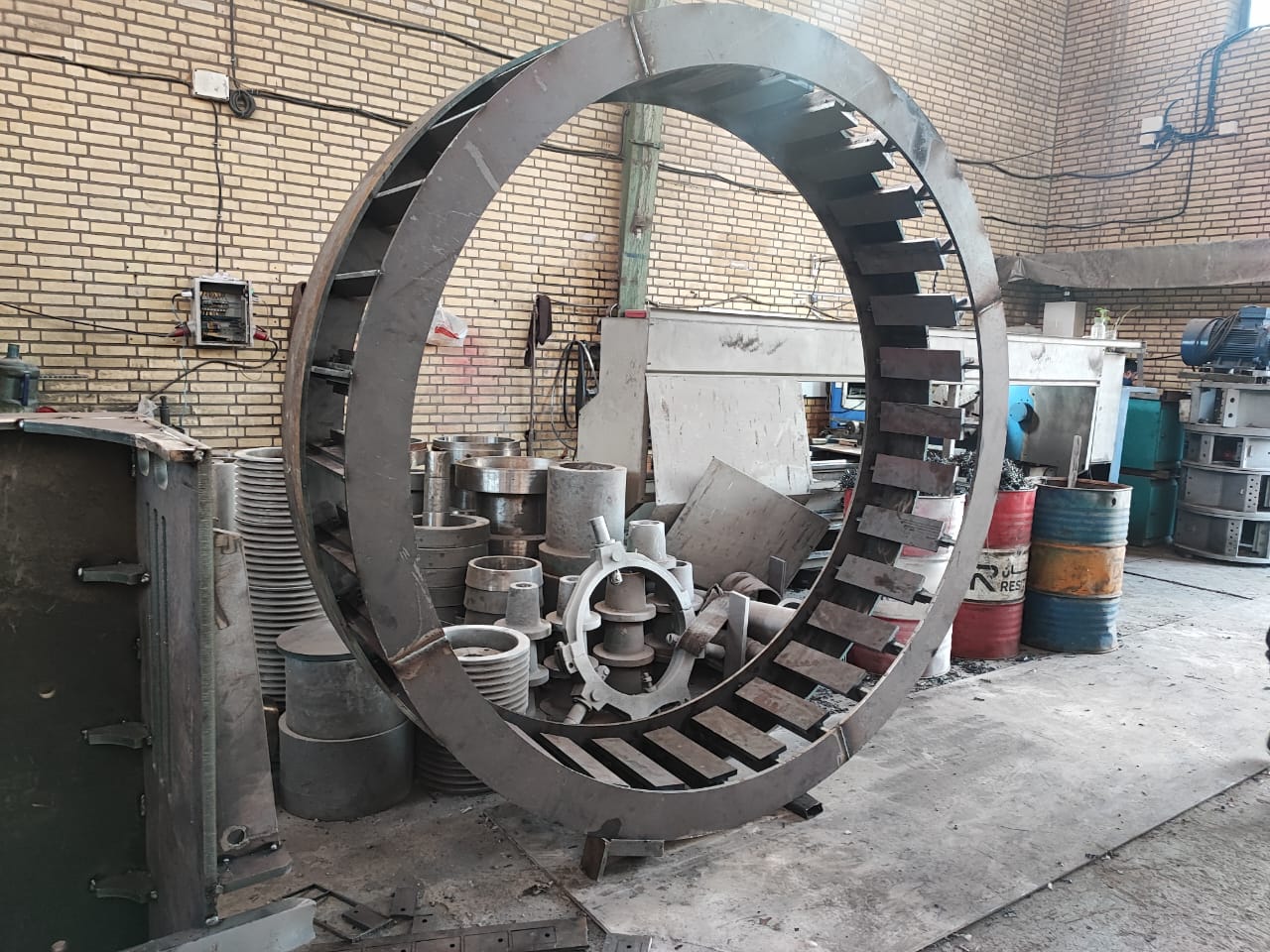
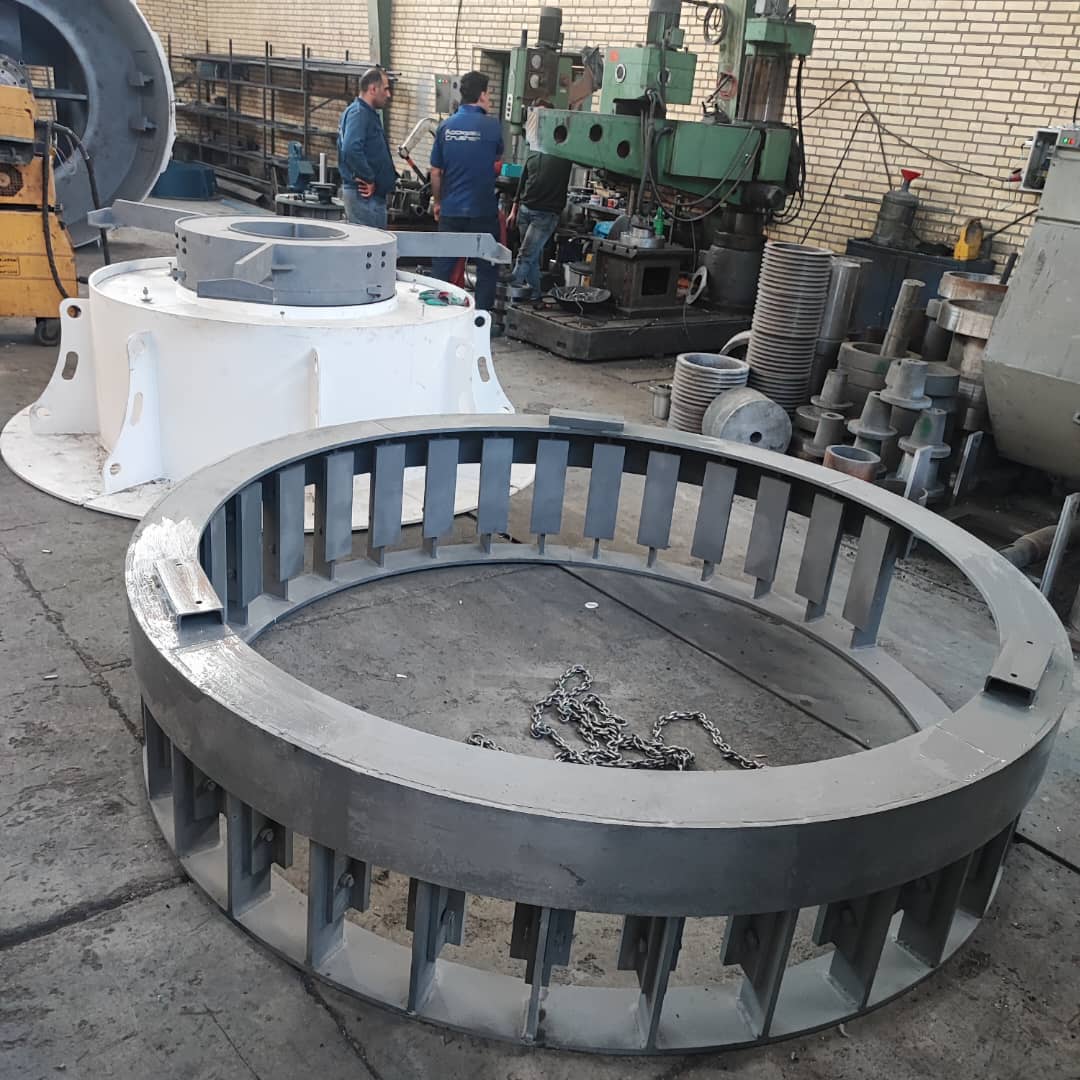
A ring with radial blades around the chamber. Stone collects between the blades and forms the rock shelf, which protects the body from wear.
Hopper and feed tube
Delivers material exactly to the center of the rotor. A worn feed tube causes off-center feeding, uneven tip wear and vibration.
Shaft and bearing cartridge
The vertical shaft and bearings that carry the rotor. Correct lubrication and dust sealing determine its service life.
Dual-motor drive and hydraulic unit
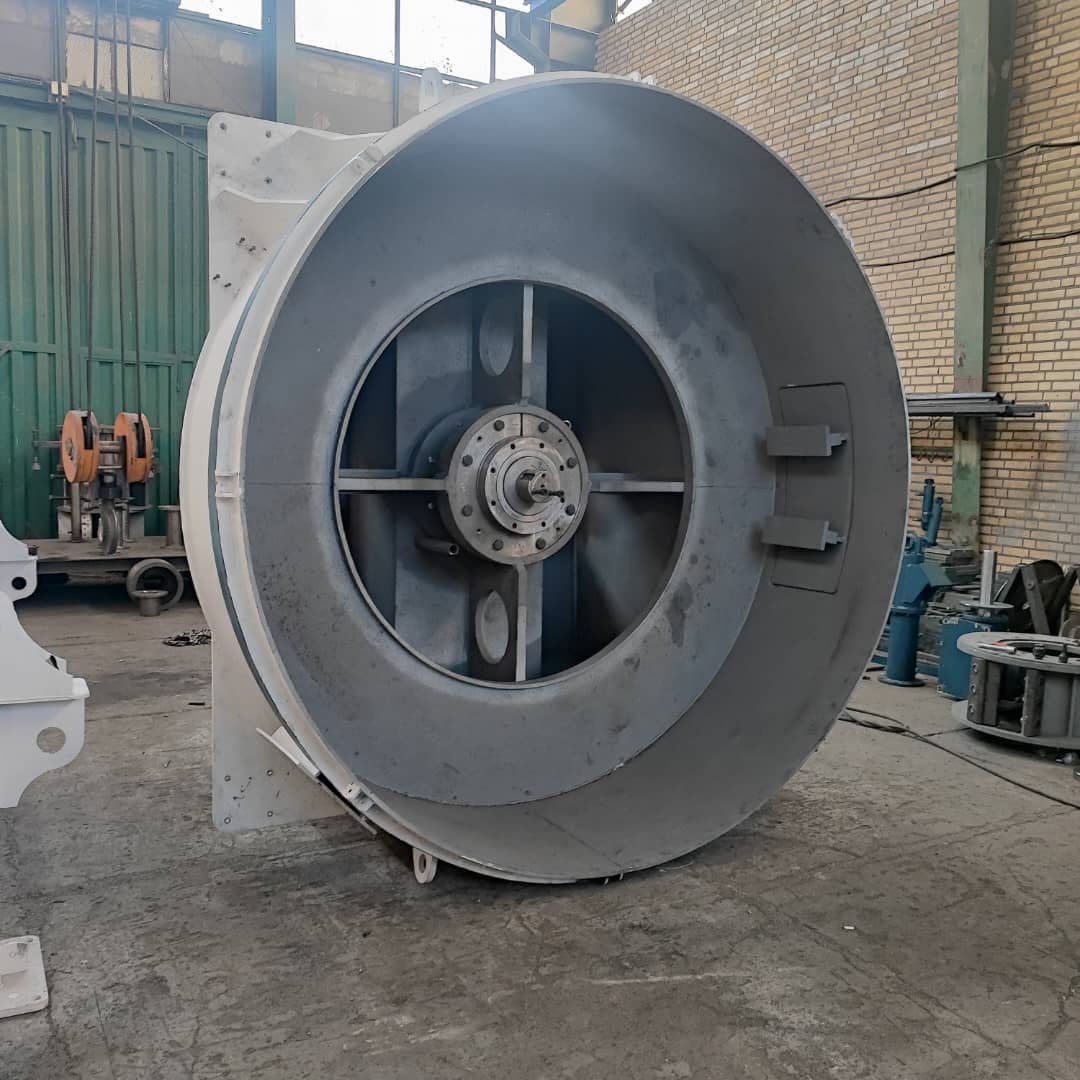
On large models such as the VSI-900, two electric motors drive the rotor from both sides with belts. A hydraulic unit makes belt tensioning and opening the top lid easy.
Applications of the rock on rock crusher
- Manufactured sand production: a replacement for river sand, whose sources are shrinking every year.
- Ready-mix concrete sand: cubical grains improve workability and reduce cement use. Read more in washed sand and concrete quality.
- Asphalt aggregate: cubical, angular grading gives better interlock in the mix (see our asphalt plant).
- Aggregate shaping: turning flaky, elongated output from other crushers into cubical, standard aggregate.
- Mining and industrial minerals: crushing silica, limestone, slag and industrial minerals.
Advantages and limitations of the VSI sand maker
✅ Advantages
- Low wear-part cost per ton
- Cubical grains and high sand quality
- Grading adjustable through rotor speed and cascade
- Accepts feed containing fines
- Simple design and quick service
- Suitable for hard, abrasive stone
⚠️ Limitations
- Limited feed size (usually up to 40–45 mm)
- High power use per ton, especially at high speed
- High moisture and clay reduce efficiency
- Needs accurate rotor balance and regular service
- Not a replacement for a primary or secondary crusher
Rockwell Crusher rock on rock models and specifications
Rockwell Crusher builds the rock on rock crusher in several models, so there is a suitable machine for both small and large plants.
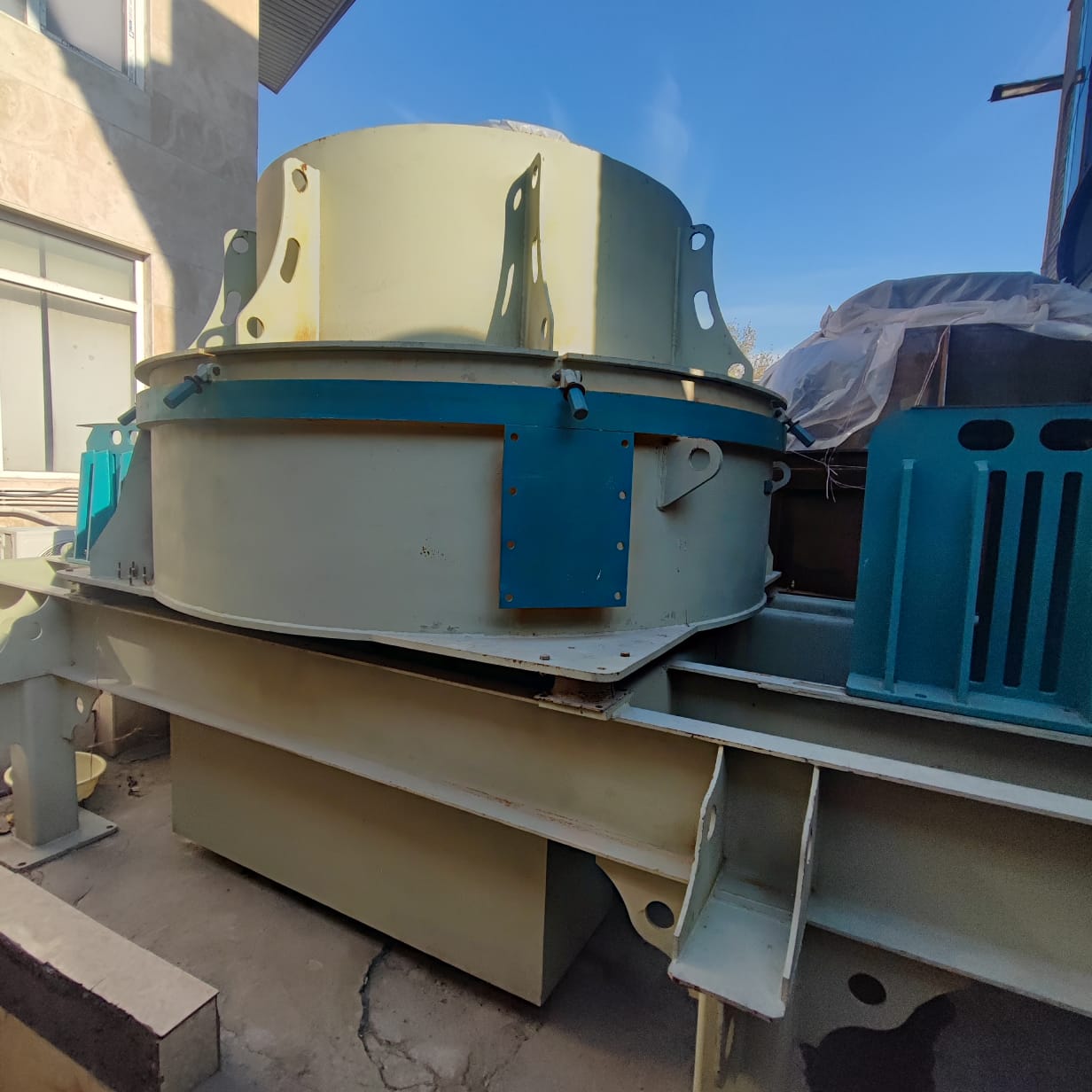
Rock on rock crusher VSI-900 (flagship)
Rockwell Crusher’s flagship, with a dual-motor drive and a rotor built in our own workshop.
Rock on rock crusher VSI-800
A lighter version of the VSI-900 with the same design, dual-motor drive and Rockwell Crusher rotor, for plants that need less capacity.
VSI 1 to VSI 3: compact, lighter models
| Model | Feed size (mm) | Output size (mm) | Capacity (t/h) | Weight (t) |
|---|---|---|---|---|
| VSI 1 | 0–40 | 0–6 | 50–80 | 8.3 |
| VSI 2 | 0–45 | 0–6 | 60–120 | 9.8 |
| VSI 3 | 0–45 | 0–6 | 80–140 | 10 |
🎯 Which rock on rock model suits you?
Enter the feed capacity your plant needs to see a suggested model:
Where the rock on rock crusher sits in a sand and gravel plant
The rock on rock crusher is usually the last crusher in the line. Its feed must already be reduced in earlier stages. A common layout is:
After the rock on rock crusher, the product is screened and oversize returns to the crusher in a closed circuit. The sand goes to a bucket wheel sand washer or a spiral sand washer to remove silt and clay, and process water is recovered with a thickener. For a full comparison of crusher types, see the crusher selection guide.
Factors that affect performance and sand quality
| Factor | Effect | Recommendation |
|---|---|---|
| Rotor tip speed | Higher speed → finer sand, but lower capacity and more power use | Set to match the target grading |
| Cascade ratio | More cascade → more capacity and less reduction | Adjust with the cascade gates |
| Feed size | Oversize feed → heavy tip wear and vibration | Screening before the VSI is essential |
| Moisture and clay | Build-up in the chamber and lower efficiency | Dry or pre-washed material |
| Feed consistency | Irregular feed → variable quality and uneven wear | Feeder or conveyor with steady flow |
Maintenance, spare parts and troubleshooting
A rock on rock crusher is low-cost to run, as long as it gets regular service. The key maintenance points:
- Daily: check for unusual vibration and noise, bearing temperature and steady feeding.
- Weekly: inspect the rotor tips and wear plates. Tips should be replaced together, in matched-weight pairs, to keep the rotor balanced.
- Monthly: check the feed tube, belt tension, lubrication and the condition of the rock shelf.
| Problem | Likely cause | Solution |
|---|---|---|
| Heavy vibration | Uneven tip wear, unbalanced rotor, stone stuck in the rotor | Balance the rotor and replace tips in pairs |
| Hot bearings | Poor lubrication or dust ingress | Check grease or oil and the seals |
| Lower sand quality | Lower rotor speed, too much cascade, worn tips | Adjust speed and cascade, replace tips |
| Lower capacity | High moisture or irregular feed | Control moisture and steady the feed |
Rockwell Crusher supplies all rock on rock crusher spare parts, including the complete rotor, tips and wear plates. See our complete rock on rock crusher spare parts guide.
What does the price of a rock on rock crusher depend on?
There is no fixed price; it depends on the order specifications. The main factors are:
- Model and capacity: rotor diameter and the number and power of the motors.
- Motor brand and quality: for example Siemens or other brands.
- Wear-part material and quality: tungsten carbide tips and wear-resistant plates.
- Bearing type and shaft cartridge.
- Accessories: hydraulic unit, frame, electrical panel and inverter.
- Transport, installation and commissioning costs.
Rock on rock crusher buying guide
- Know your stone: the hardness and abrasiveness of the stone (river gravel, quarry rock, granite, limestone) determine the chamber type and wear parts.
- Calculate real capacity: base it on the sand output you need, not just the feed.
- Define the target grading: concrete sand, asphalt sand or aggregate shaping.
- Check the manufacturer: track record, in-house rotor production, spare parts availability and after-sales service.
- See it in person: visit the workshop and machines in operation.
Why buy a rock on rock crusher from Rockwell Crusher?
The rock on rock crusher is Rockwell Crusher’s core specialty. Our technical team has built and commissioned several rock on rock machines for large mining companies and sand producers, backed by years of experience designing and building crushing equipment.
Fully built in-house
Body, chamber, rock shelf ring and frame are all built in our own workshop.
Our own rotor
We design, build and balance the VSI rotor ourselves.
Spare parts in stock
Tips, wear plates and spare rotors without import delays.
Custom builds
We adapt capacity and specifications to your stone and plant requirements.
Installation and after-sales
Plant design, installation, commissioning and on-site technical support.
Rock on rock crusher FAQ
What is a rock on rock crusher used for?
What is the difference between a rock on rock crusher and a cone crusher?
What is the maximum feed size of a rock on rock crusher?
What is the capacity of a rock on rock crusher?
How often should the rotor tips be replaced?
Is rock on rock sand suitable for concrete?
Where can I get rock on rock crusher spare parts?
Free consultation and rock on rock crusher quote
Tell us your stone type and required capacity, and Rockwell Crusher’s team will recommend the most suitable model.