



Blog
What Is an Impact Crusher? Types, Working Principle, Applications and Selection Guide

The impact crusher is one of the most widely used machines in aggregate plants, limestone quarries and recycling. It breaks rock by impact rather than compression, so it produces aggregate with cubical particles and a high reduction ratio. This guide explains what an impact crusher is, how it works, its types, which rocks it suits and what to check when you buy one. It is based on Rockwell Crusher’s experience building the HS series impact crusher.
What Is an Impact Crusher?
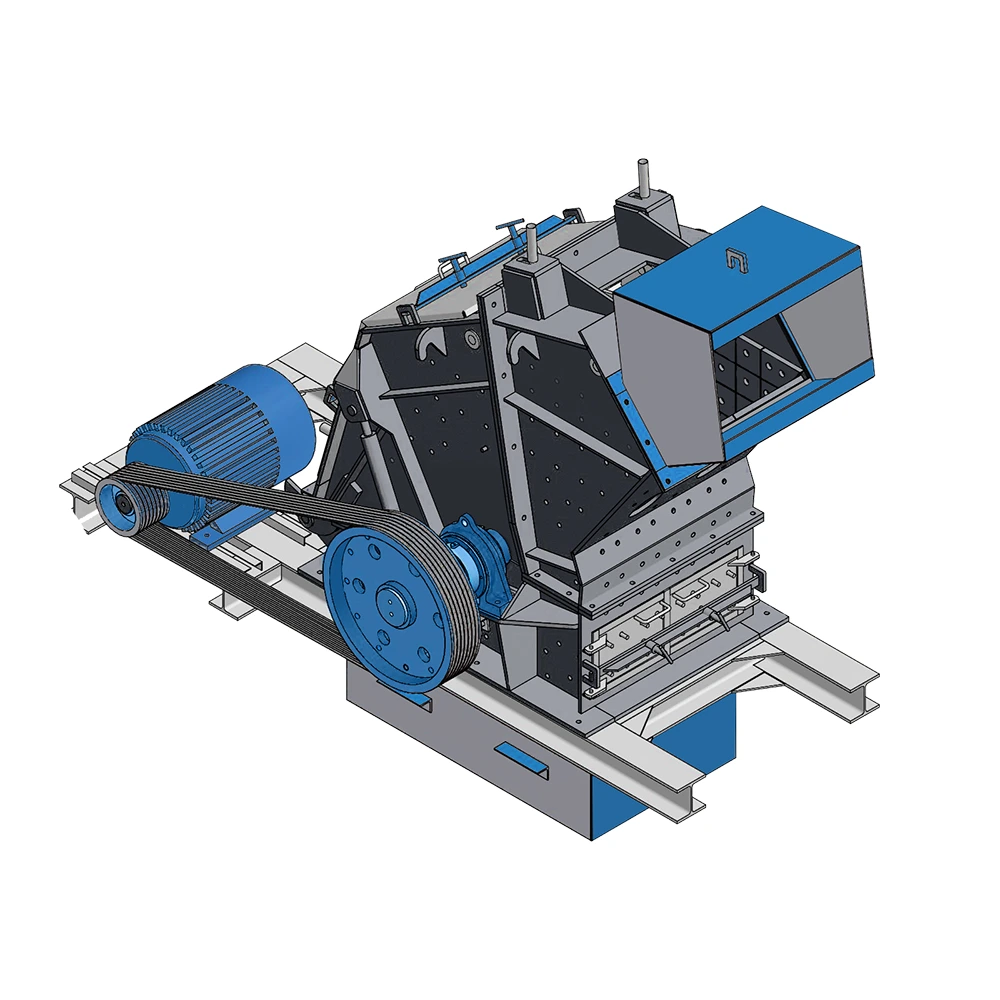
An impact crusher uses impact energy to break rock. At its heart is a heavy rotor that spins at high speed, and the hammers or blow bars fixed to it strike the rock. The rock is then thrown against plates called impact aprons (breaker plates) and breaks again. Rock splits along its natural weaknesses and cracks, which is why the particles come out cubical.
| Feature | Description |
|---|---|
| Other names | Impactor, horizontal shaft impactor (HSI) |
| Crushing method | Hammer impact and collision with aprons |
| Crushing stage | Mostly secondary; sometimes primary in soft rock |
| Suitable rock | Soft to medium-hard, low abrasion: limestone, dolomite, river gravel, construction waste |
| Particle shape | Cubical |
| Rockwell Crusher models | HS7, HS10, HS14 and HS16 |
How Does an Impact Crusher Work?
- Feed: rock enters the crushing chamber through the feed chute.
- Hammer impact: the rotor spins at high speed and the hammers strike the rock. Most of the size reduction happens here.
- Collision with the aprons: rock is thrown against the aprons, breaks, and falls back into the path of the hammers. Rock-on-rock collisions also help.
- Discharge: once particles are smaller than the gap between hammers and aprons, they leave at the bottom.
Product size depends mostly on the gap between the aprons and the rotor. Moving the aprons closer gives a finer product; moving them away gives a coarser one. Rotor speed also matters: higher speed means a finer product and more wear.
Types of Impact Crusher
Horizontal shaft impact crusher (HSI)
The most common type. The rotor turns on a horizontal shaft with hammers rigidly fixed to it. It is used for secondary crushing of limestone, dolomite and river gravel and for producing cubical aggregate. The Rockwell Crusher HS series is of this type.
Vertical shaft impactor (VSI)
The rotor turns on a vertical shaft and throws rock at high speed against the wall or against a bed of rock. The rock-on-rock version is called the rock-on-rock crusher, the best machine for manufactured sand with cubical particles. Rockwell Crusher builds the VSI-900 and VSI-800.
Hammer crusher
The hammers swing freely on the rotor and there is usually a grate below it. It is used for soft materials such as limestone, coal and gypsum, and for fine crushing.
| Feature | Horizontal shaft (HS) | Rock-on-rock (VSI) | Hammer crusher |
|---|---|---|---|
| Rotor shaft | Horizontal | Vertical | Horizontal |
| Stage | Secondary | Final, sand making | Fine crushing of soft rock |
| Main product | Cubical aggregate | Sand with cubical particles | Fine material |
| Suitable rock | Soft to medium-hard | Most rock types | Soft |
Main Parts of an Impact Crusher
| Part | Function |
|---|---|
| Rotor | The heart of the machine; carries the hammers and spins at high speed |
| Hammers (blow bars) | Wear parts that strike the rock |
| Impact aprons | Plates the rock is thrown against; their gap to the rotor sets the product size |
| Housing and liners | Form the crushing chamber and protect the housing from wear |
| Shaft and bearings | Support the rotor and need regular lubrication |
| Apron adjustment system | Sets the apron gap with screws or cylinders |
| Motor and pulley | Drive the rotor via belts |
In the Rockwell Crusher HS impact crusher, the main shaft is usually made of MO40 alloy steel, and the housing opens with a hydraulic cylinder for quick access to the rotor and hammers.
Hammer and Apron Materials
Hammer and apron life is the biggest cost factor of an impact crusher. The material is chosen according to rock hardness and abrasiveness:
- Manganese steel: tough and impact resistant; for large feed and heavy impact.
- Molybdenum manganese steel: better wear resistance while staying tough.
- Ni-Hard cast iron: high hardness and wear resistance.
- High-chrome cast iron: the highest wear resistance; for abrasive, siliceous rock, as long as the feed is not too large.
Which Rocks Suit an Impact Crusher?
Impact crushers perform best on soft to medium-hard, low-abrasion rock: limestone, dolomite, river gravel and cobbles, and concrete and asphalt waste. Here the machine produces uniform cubical aggregate in a single stage.
In hard, high-silica rock such as granite, basalt and quartzite, hammer and apron wear rises and so does the cost per ton. There a hydrocone (cone crusher) is usually more economical, followed by a rock-on-rock crusher if cubical sand is needed.
Impact Crusher Applications
- Aggregate for concrete and asphalt: cubical particles improve concrete strength and asphalt quality.
- Limestone and dolomite quarries: feed for cement, lime and building materials plants.
- River sand and gravel: crushing cobbles into crushed aggregate.
- Recycling: crushing concrete and reclaimed asphalt for reuse.
- Iron ore and metal mines: in sizing lines, especially with larger models such as the HS14.
Rockwell Crusher HS Impact Crusher Specifications
Rockwell Crusher builds its horizontal shaft impact crusher in four models in its own workshop in Shahr-e Qods, Tehran. Capacity can be custom-built higher or lower on request:
| Specification | HS7 | HS10 | HS14 | HS16 |
|---|---|---|---|---|
| Capacity (t/h) | 80–100 | 130–180 | 150–225 | 200–300 |
| Max. feed size (mm) | 150–200 | 200–300 | 250–350 | 300–350 |
| Product size (mm) | 0–12 | 0–14 | 0–20 | 0–20 |
| Motor power (kW) | 55–75 | 90–110 | 135 | 135–160 |
| Approx. weight (t) | 8–8.5 | 14.5–15 | 18.5–20 | 21–24 |
| Main application | Small projects | Medium and large plants | Large plants and iron ore | High-capacity quarries |
The HS10 is the most popular model in Iran thanks to its balance of capacity, power consumption and price. See each model on the HS impact crusher page.
Impact Crusher vs Jaw and Cone Crushers
| Feature | Impact crusher | Jaw crusher | Hydrocone (cone) |
|---|---|---|---|
| Crushing method | Impact | Compression | Compression |
| Stage | Secondary | Primary | Secondary and tertiary |
| Reduction ratio | High | Low to medium | Medium |
| Particle shape | Cubical | More flaky | Fairly cubical |
| Suitable rock | Soft to medium-hard | All types | Hard and abrasive |
| Wear cost in hard rock | High | Low | Low |
In a plant, a jaw crusher usually comes first, followed by an impact crusher or hydrocone. For a full comparison, see our crusher selection guide and what is a crusher.
Advantages and Disadvantages
Advantages
- Cubical particles, ideal for concrete and asphalt
- High reduction ratio; sometimes saves a crushing stage
- Simpler design and lower purchase price than a cone crusher of the same capacity
- Easy gradation control via the apron gap
- Quick hammer and apron changes
Disadvantages
- High hammer and apron wear in hard, siliceous rock
- More fines than compression crushers
- Sensitive to tramp iron
Impact Crusher Maintenance
- Check noise, vibration, bearing temperature and feed evenness daily.
- Inspect hammer wear regularly and turn them, where possible, to use both edges.
- Reset the apron gap as parts wear.
- Grease the bearings on schedule.
- Install a magnet over the feed conveyor to keep out tramp iron.
- Replace all hammers together with equal weights to keep the rotor balanced.
What Determines the Price of an Impact Crusher?
- Model and capacity: larger models have a bigger housing, rotor and motor.
- Hammer and apron material: wear part quality decides your operating cost in later years.
- Motor and accessories: motor power and brand, base frame and apron adjustment system.
- Services: installation, commissioning, warranty and spare parts availability.
Rockwell Crusher builds impact crushers directly in its own workshop, and hammers and aprons are always available. For a quotation, send our team your rock type, required capacity, feed size and target gradation, or call +98 912 133 3594.
Impact Crusher FAQ
What is an impact crusher?
An impact crusher breaks rock by impact rather than compression. A rotor spins at high speed, its hammers (blow bars) break the rock and throw it against the impact aprons, producing aggregate with cubical particles.
What are the types of impact crusher?
There are three main types: the horizontal shaft impact crusher (HSI) such as the HS series, the vertical shaft impactor (VSI) or rock-on-rock crusher for sand making, and the hammer crusher for soft rock and fine crushing.
Which rocks is an impact crusher suitable for?
Soft to medium-hard, low-abrasion rock such as limestone, dolomite, river gravel and construction waste. For granite, basalt and high-silica rock the hammers wear quickly, and a cone crusher is usually more economical.
What is the difference between an impact crusher and a cone crusher?
An impact crusher breaks rock by impact, giving more cubical particles and a higher reduction ratio, but it wears fast in hard rock. A cone crusher (hydrocone) works by compression and has lower wear costs in hard, abrasive rock.
How is the output size of an impact crusher adjusted?
By changing the gap between the impact aprons and the rotor, and on some machines the rotor speed. A smaller gap gives a finer product. As hammers and aprons wear, the gap must be reset.
What is the capacity of the Rockwell Crusher impact crusher?
The Rockwell Crusher HS series has four models: HS7 at 80–100 t/h, HS10 at 130–180 t/h, HS14 at 150–225 t/h and HS16 at 200–300 t/h. Capacity can be custom-built higher or lower on request.