


Impact Crusher (HS)
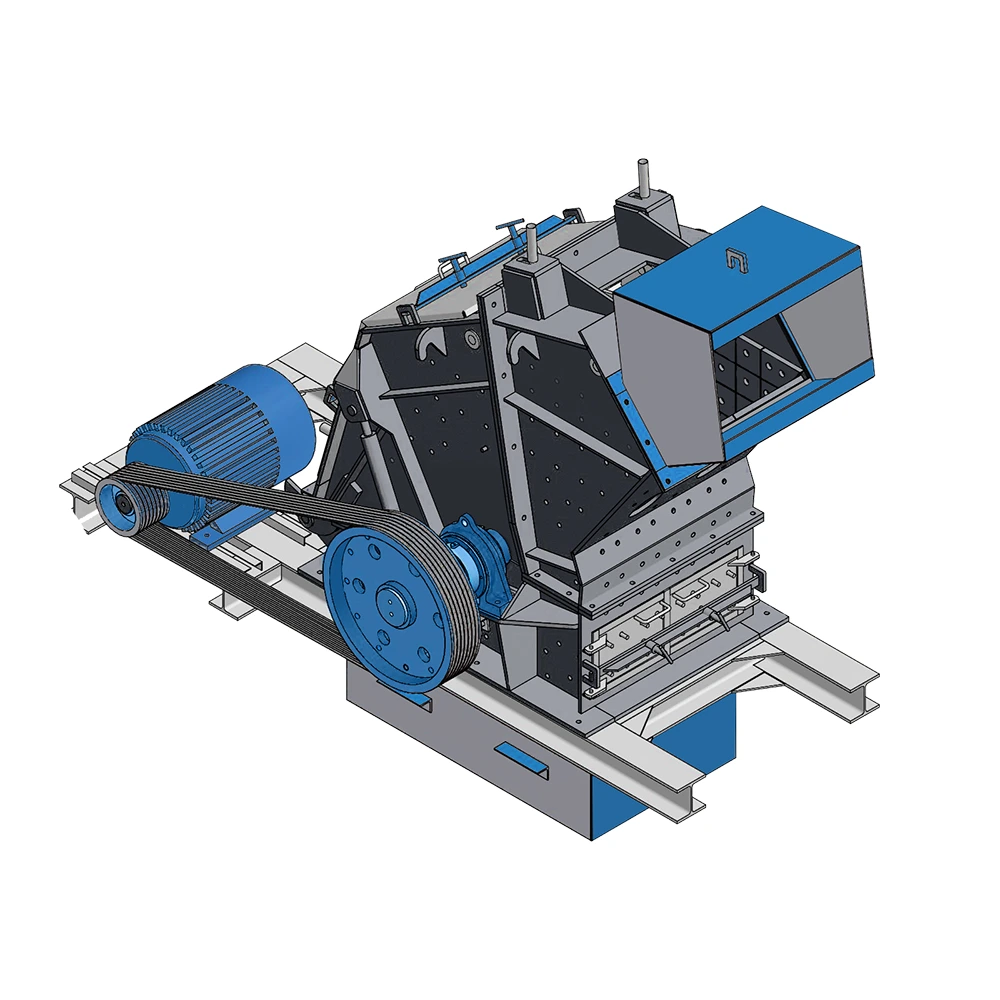
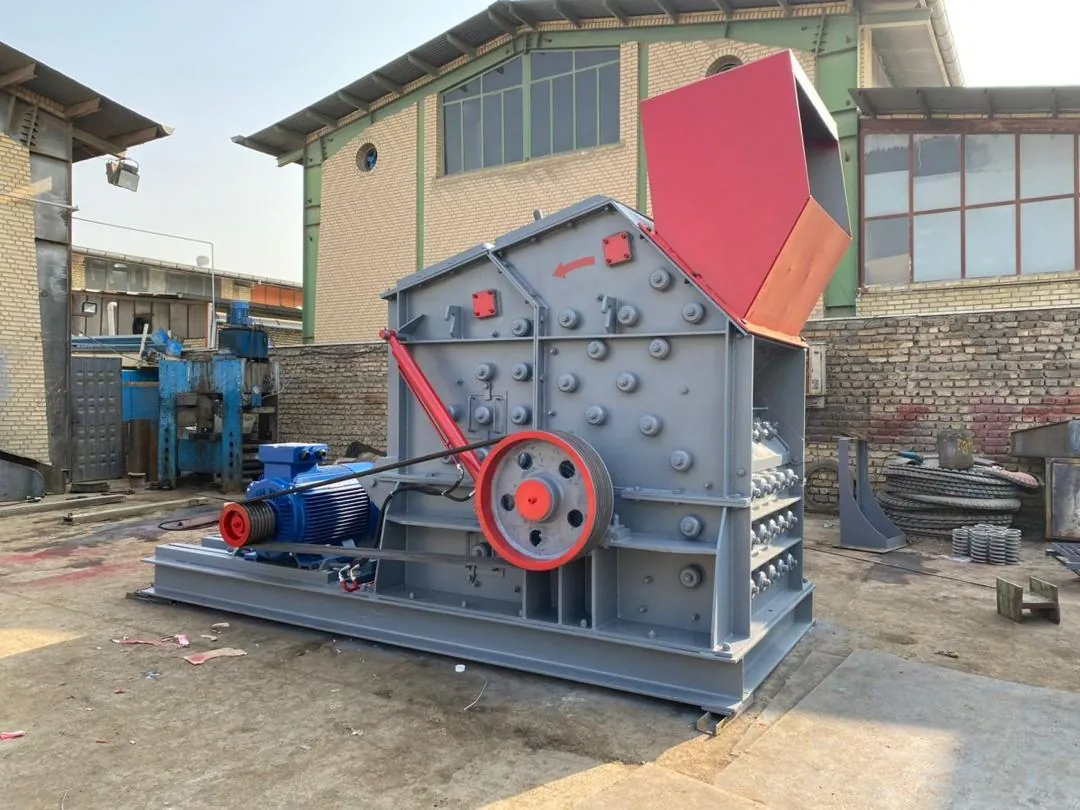
Rockwell Crusher HS impact crusher (Böhringer design) for secondary crushing of soft to medium-hard rock and producing cubical aggregate. Four models, HS7, HS10, HS14 and HS16, with 80 to 300 t/h capacity; custom capacity available.
- Designed and built in the Rockwell Crusher workshop, Shahr-e Qods
- Fast spare parts supply
- Installation, commissioning and after-sales service
HS Impact Crusher (Horizontal Shaft Impactor)
The Rockwell Crusher HS series is a horizontal shaft impact crusher for secondary crushing and gravel production. It breaks rock with rotor hammers and impact plates and produces cubical aggregate for concrete and asphalt. The HS series is built in four models, HS7, HS10, HS14 and HS16, with capacities from 80 to 300 tons per hour.
Application
Secondary crushing of limestone, dolomite and medium-hard rock in sand and gravel plants, concrete and asphalt plants and quarries. It usually follows the jaw crusher, and its product goes to the screen or to the rock on rock VSI crusher for sand.
Built by Rockwell Crusher
Built in the Rockwell Crusher workshop in Shahr-e Qods, Tehran, Iran, so wear parts such as hammers and impact plates are always available, with installation, commissioning and after-sales service.
Applications
Which Industries Use Impact Crushers?
Impact crushers are mostly used where cubical gradation and a high reduction ratio matter. In a production line, this machine is usually placed after the jaw crusher , and its output is carried by a belt conveyor to the vibrating screen .
Sand and gravel for concrete and asphalt
Producing cubical, uniform gravel that increases concrete strength and asphalt quality.
Limestone and dolomite quarries
Crushing limestone for cement, lime and building materials plants.
River sand and gravel
Breaking river cobbles to produce crushed aggregate and increase line capacity.
Debris and asphalt recycling
Crushing concrete, construction debris and milled asphalt for reuse.
Iron ore and metal mines
The HS impact crusher is also used in iron ore and metal ore crushing lines – especially the HS14, which suits large grading lines and iron ore.
Working Principle
How Does an HS Impact Crusher Work?
The crusher is built around a very heavy disc rotor carrying several rows of blades (usually 5) and steel hammers. Material enters through the feed opening and is struck by the rotating hammers. Centrifugal force and the hammer impact throw the stone against the inner walls, which are lined with breaker plates (anvils and liners). This multi-stage impact breaks the stone, and by adjusting the gap between the rotor and the breaker plates the output size and grading can be set precisely.
- FeedingRock enters the crushing chamber through the feed chute.
- Hammer impactThe rotor spins at high speed; the hammers break the rock and throw it toward the impact plates.
- Impact platesRock breaks further as it hits the impact plates and other particles.
- DischargeCrushed material leaves from the bottom. Product size is set by the gap between the impact plates and the rotor.
Models
HS Impact Crusher Models and Capacity
Actual capacity depends on rock type and hardness, feed gradation and impact plate setting.
The figures are approximate and vary slightly with rock hardness and the required grading. We can also build the crusher with a higher or lower capacity to suit your needs.
| Specification | HS7 | HS10 | HS14 | HS16 |
|---|---|---|---|---|
| Capacity (t/h) | 80–100 | 130–180 | 150–225 | 200–300 |
| Max. feed size (mm) | 150–200 | 200–300 | 250–350 | 300–350 |
| Output size (mm) | 0–12 (adjustable) | 0–14 (adjustable) | 0–20 (adjustable) | 0–20 (adjustable) |
| Motor power (kW) | 55–75 | 90–110 | 135 | 135–160 |
| Approx. weight (t) | 8–8.5 | 14.5–15 | 18.5–20 | 21–24 |
| Number of hammers | 4 | 4 | 4 or 6 | 4 or 6 |
| Approx. weight per hammer (kg) | 109 | 186–191 | 114 (different design) | 220 |
| Main application | Small projects and local quarries | Medium to large asphalt and sand plants | Large grading lines and iron ore | Large mines with high tonnage and feed volume |
Models
Review of the HS Series Models
HS7 model
The smallest model in the series, for smaller crushing lines with lower tonnage. It has 4 hammers (about 109 kg each) and suits sand and gravel production on a limited scale.
HS10 model
The most widely used and popular model in Iran, for medium to large lines. It has 4 heavier hammers (about 186–191 kg). Its good balance of capacity, power consumption and price makes it the first choice of many quarries.
HS14 model
For larger quarries that need to crush bigger rock at higher capacity. Its chamber is wider and accepts a larger feed volume.
HS16 model
A heavy and very powerful machine for large road-building projects and high-capacity mines. Its hammers are very large and heavy (about 220 kg) to break hard, bulky rock.
Wear parts
Hammer, Breaker Plate and Shaft Materials
Depending on the quarry, the hammers and breaker plates of the HS impact crusher are made of manganese steel, molybdenum-manganese steel, Ni-Hard cast iron or high-chrome cast iron, all highly resistant to wear. The main shaft is usually made of tough MO40 alloy steel.
For very abrasive rock (such as silica), we recommend ordering the crusher with Ni-Hard or high-chrome hammers and breaker plates.
Practical tip: If you are setting up or upgrading a production line, the HS10 is the most economical and hassle-free choice, thanks to the wide availability of spare parts, accessible after-sales service and its fit for most typical quarry needs.
Features
Features of the Rockwell Crusher HS Impact Crusher
Cubical grain shape
The output has a multi-faceted, fully cubical shape – the best form for concrete production and road building (asphalt).
High reduction ratio
Rock is reduced to a much smaller size in one stage, sometimes removing the need for an extra crushing stage.
Adjustable product size
Product size is set by changing the gap between the impact plates and the rotor.
Easy wear part replacement
Hammers and impact plates are replaceable and supplied by Rockwell Crusher.
Machine Structure
Main Components of an Impact Crusher
Knowing the components of an impact crusher helps with better maintenance and timely sourcing of spare parts.
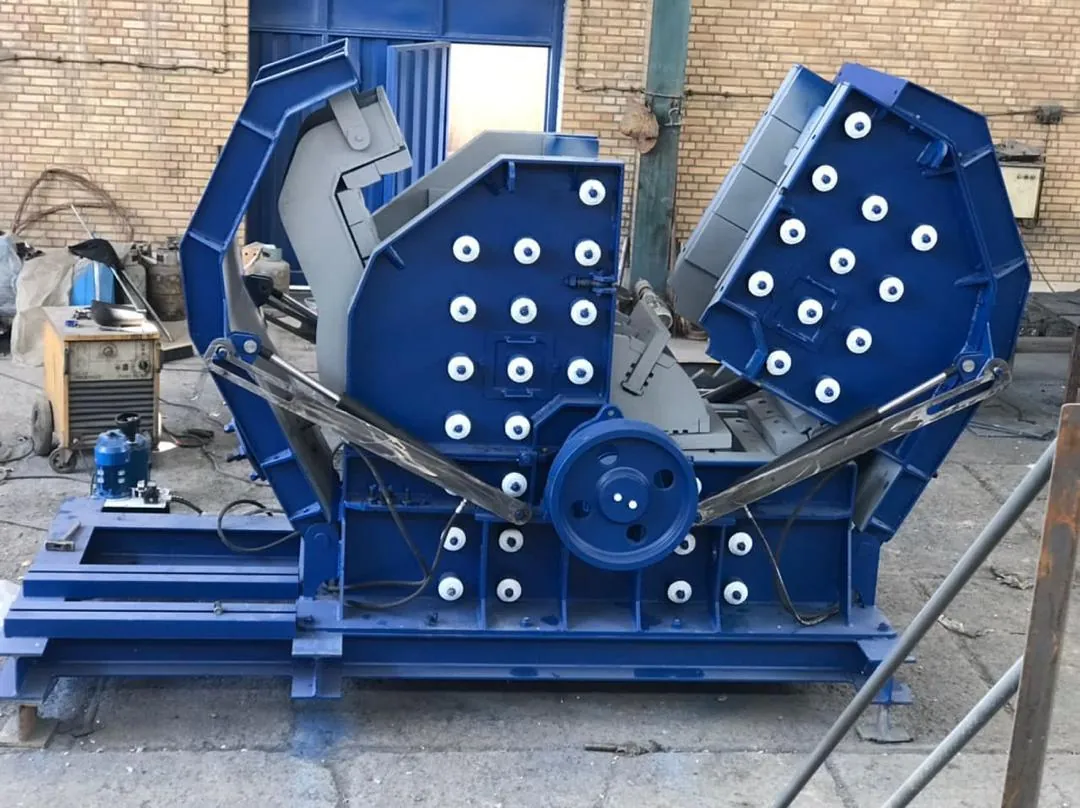
The body is designed with jacks and inspection doors so wear parts such as hammers and liners can be replaced quickly on site.
Rotor
The rotating part of the machine that spins at high speed and carries the blow bars.
Blow bar (fixed hammer)
The blades that strike the rock. The blow bar is the machine’s most important wear part, and its material is chosen according to the rock type.
Impact aprons
Thrown rock hits these plates and is crushed again. Their distance from the rotor determines the product size.
Inner armor
Wear-resistant plates that protect the body from rock impact and are replaceable.
Hydraulically opening housing
The upper part of the housing opens with a hydraulic ram so blow bars and armor can be replaced quickly.
Electric motor, pulley and belts
The electric motor’s power is transmitted to the rotor through belts and pulleys.
Comparison
HS Impact Crusher vs Other Crushers
| Feature | HS impact (horizontal) | Rock on rock VSI | Cone crusher (hydrocone) |
|---|---|---|---|
| Crushing method | Hammer impact | Rock against rock | Compression |
| Stage | Secondary | Final, sand production | Secondary and tertiary |
| Grain shape | Cubical | Very cubical | Fairly cubical |
| Best rock | Soft to medium-hard | All types | Hard and abrasive |
For hard and abrasive rock see the cone crusher (hydrocone). We can also build the machine with higher or lower capacity to suit the customer.
Price
What Determines the Price of an Impact Crusher?
The price of an impact crusher is not a fixed figure and depends on the model and order conditions. The most important factors are:
Model and capacity
Rotor dimensions, feed opening and capacity determine the machine’s weight and price.
Blow bar and armor material
The quality and material of wear parts directly affect the machine’s life and future costs.
Electric motor and auxiliary equipment
The power and type of electric motor, chassis and hydraulic system affect the final price.
Transport, installation and after-sales service
The cost of transport to the mine, installation, commissioning and support should also be considered when comparing prices.
From Our Workshop
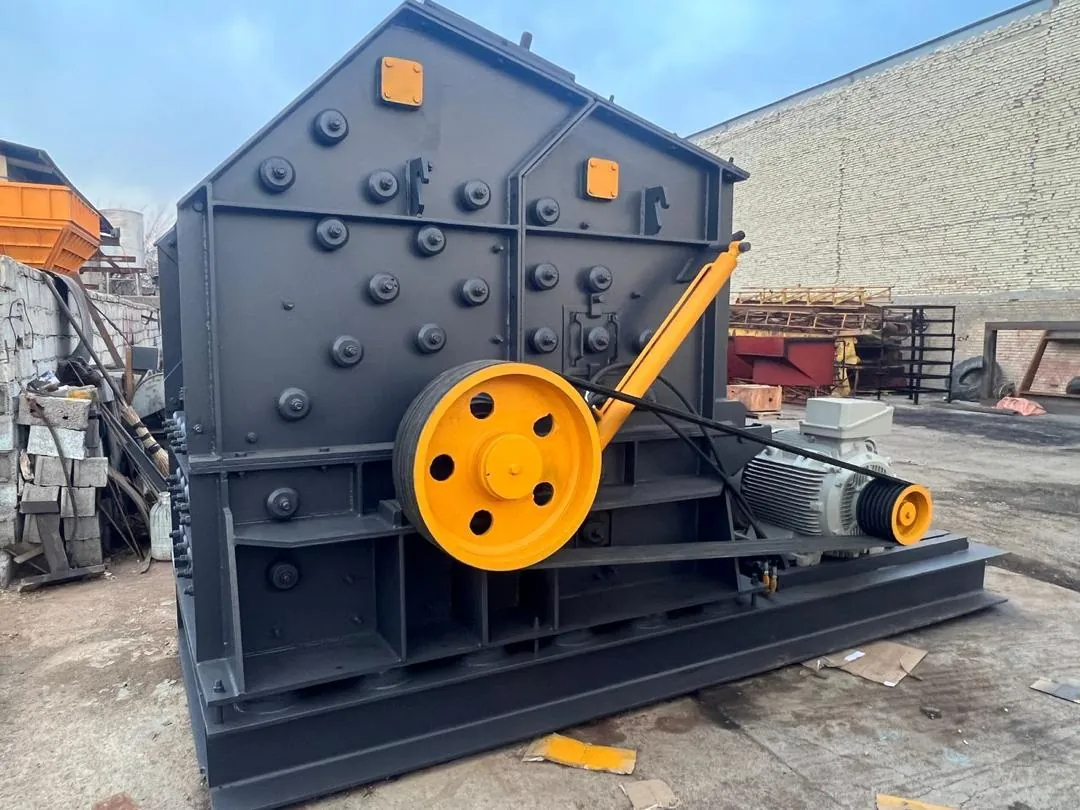
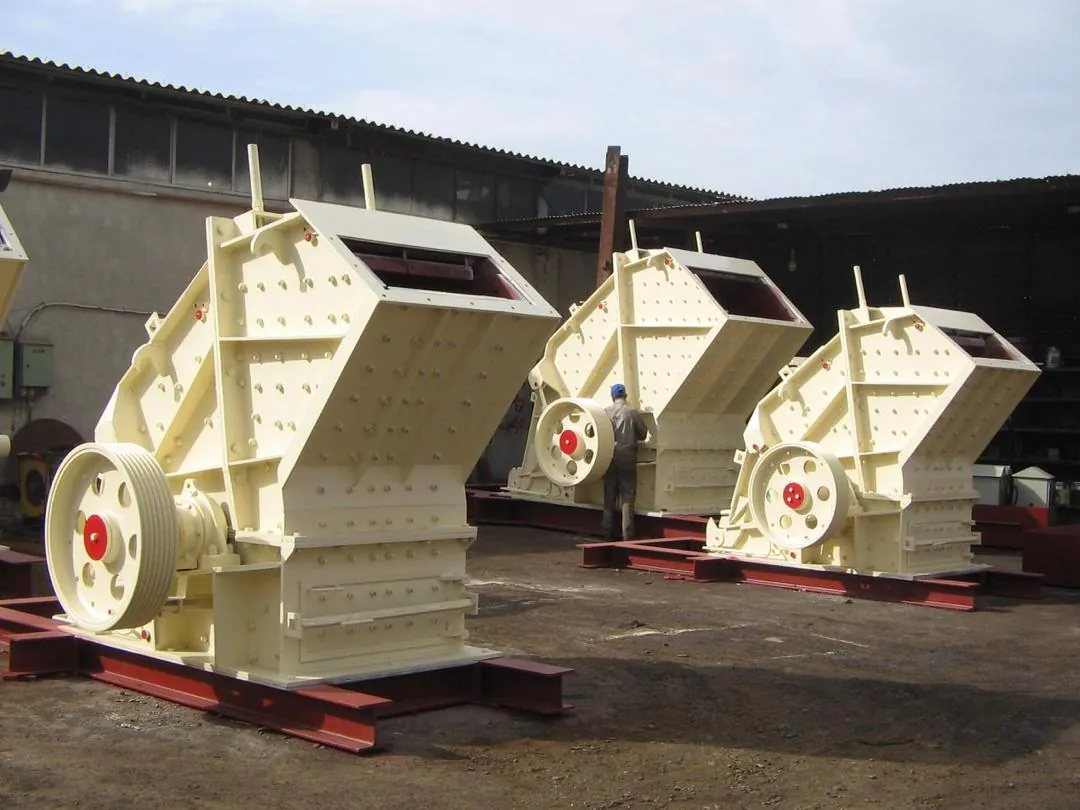
Rockwell Crusher Impact Crushers in the Workshop
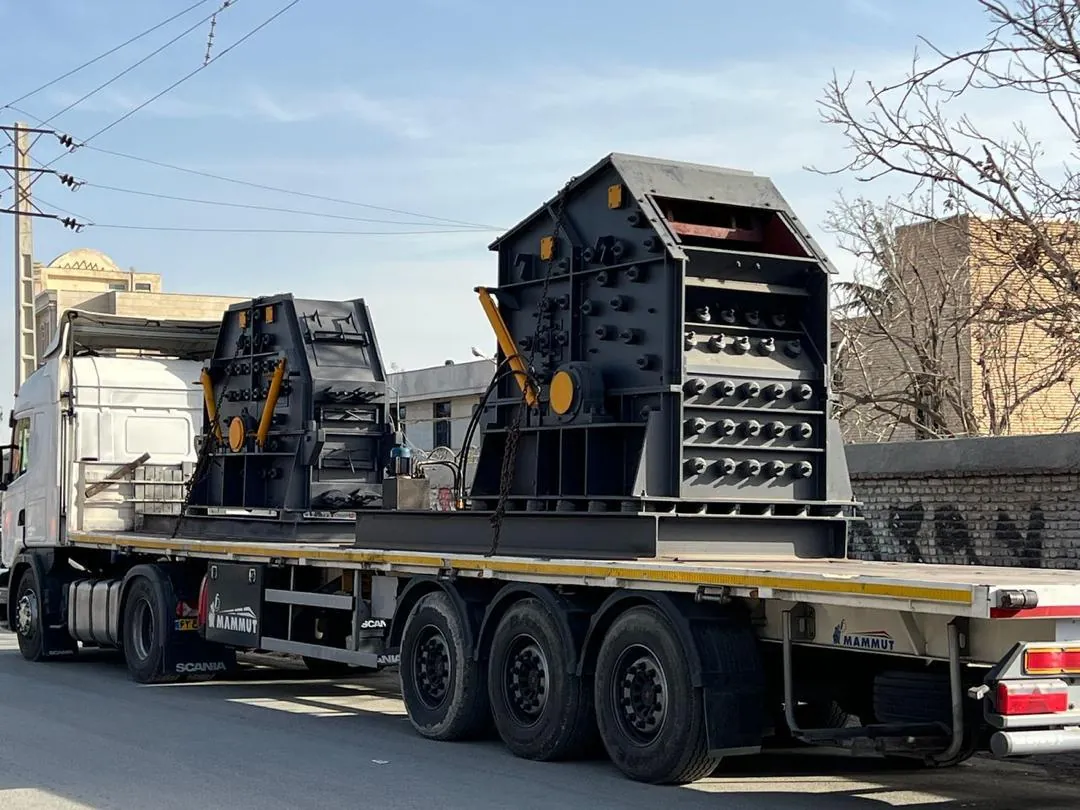
These photos show impact crushers built in the Rockwell Crusher workshop in Shahr-e Qods. To see more of our work, visit the Projects .
FAQ
Frequently Asked Questions About the HS Impact Crusher
What is an HS impact crusher?
An HS impact crusher is a horizontal shaft impact crusher, known in Iran as a Behringer crusher. A high-speed rotor with hammers strikes the rock and throws it against the impact plates (anvils), where it breaks further.
What is the capacity of the Rockwell Crusher HS series?
The HS series is built in four models: HS7 with 80–100, HS10 with 130–180, HS14 with 150–225 and HS16 with 200–300 tons per hour.
Which rocks is a horizontal impact crusher suitable for?
It works best on soft to medium-hard rock such as limestone, dolomite and river gravel. For very hard and abrasive rock such as granite and basalt, a cone crusher is usually the better choice.
What is the difference between an HS impact crusher and a rock on rock VSI crusher?
The HS crusher has a horizontal shaft and crushes with hammers; it is used for secondary crushing and gravel production. The VSI has a vertical shaft and crushes rock against rock; it is used in the final stage for manufactured sand.
How do I choose the right HS model?
The model depends on plant capacity, rock type and feed size. Share your plant details with Rockwell Crusher experts to get the right recommendation.
{“@context”:”https://schema.org”,”@type”:”FAQPage”,”mainEntity”:[{“@type”:”Question”,”name”:”What is an HS impact crusher?”,”acceptedAnswer”:{“@type”:”Answer”,”text”:”An HS impact crusher is a horizontal shaft impact crusher, known in Iran as a Behringer crusher. A high-speed rotor with hammers strikes the rock and throws it against the impact plates (anvils), where it breaks further.”}},{“@type”:”Question”,”name”:”What is the capacity of the Rockwell Crusher HS series?”,”acceptedAnswer”:{“@type”:”Answer”,”text”:”The HS series is built in four models: HS7 with 80–100, HS10 with 130–180, HS14 with 150–225 and HS16 with 200–300 tons per hour.”}},{“@type”:”Question”,”name”:”Which rocks is a horizontal impact crusher suitable for?”,”acceptedAnswer”:{“@type”:”Answer”,”text”:”It works best on soft to medium-hard rock such as limestone, dolomite and river gravel. For very hard and abrasive rock such as granite and basalt, a cone crusher is usually the better choice.”}},{“@type”:”Question”,”name”:”What is the difference between an HS impact crusher and a rock on rock VSI crusher?”,”acceptedAnswer”:{“@type”:”Answer”,”text”:”The HS crusher has a horizontal shaft and crushes with hammers; it is used for secondary crushing and gravel production. The VSI has a vertical shaft and crushes rock against rock; it is used in the final stage for manufactured sand.”}},{“@type”:”Question”,”name”:”How do I choose the right HS model?”,”acceptedAnswer”:{“@type”:”Answer”,”text”:”The model depends on plant capacity, rock type and feed size. Share your plant details with Rockwell Crusher experts to get the right recommendation.”}}]}
At a Glance
General Specifications
Buy an HS Impact Crusher – Price Inquiry
For a quote and help choosing the right model, contact Rockwell Crusher or use our contact page.
Related products


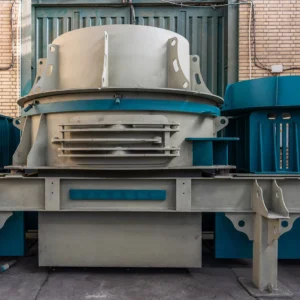
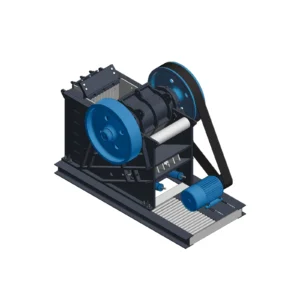

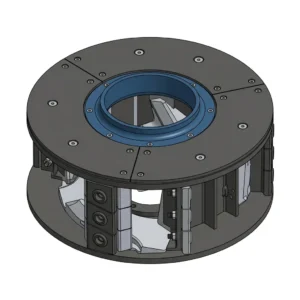
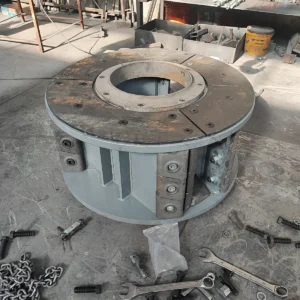
VSI Crusher Rotor
VSI (vertical shaft impact) crusher rotor made by Rockwell Crusher: the heart of the machine in manufactured sand production and cubical gradation. Machined plates, a strongly welded body and bolted, replaceable wear parts. Built entirely in the Rockwell Crusher workshop in Shahr-e Qods, with spare parts supply and technical support.