



Blog
What Is a Crusher? Types of Crushers, How They Work and Where They Are Used

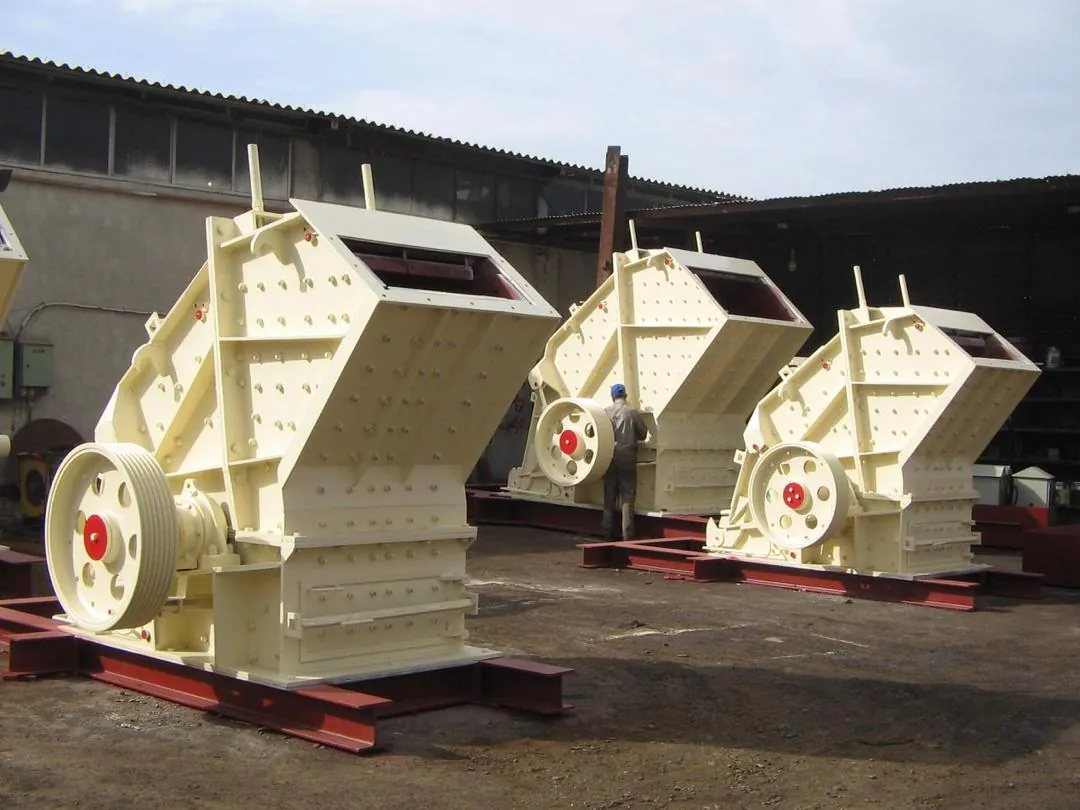
A crusher is a machine that reduces large quarry rock to smaller pieces, aggregate and sand. The word comes from the verb “crush”. In this short guide we explain what a crusher is, how it works, the main types and where each type is used.
What Is a Crusher and What Does It Do?
Rock blasted from a quarry is usually far too large to use directly in concrete, asphalt or road building. A crusher breaks it down by compression, impact or attrition to usable sizes such as chippings, gravel, sand and road base.
Crushers are used in aggregate production lines, iron ore, copper and gold mines, cement and lime plants and road and dam construction.
How Does a Crusher Work?
Every crusher breaks rock in one of three ways:
- Compression: rock is squeezed between two surfaces until it breaks, as in jaw, gyratory and cone crushers.
- Impact: rock is struck at high speed by hammers or thrown against anvils, as in impact crushers.
- Attrition (rock-on-rock): particles collide with each other and their edges break off, as in rock-on-rock (VSI) crushers.
Crushing Stages in a Production Line
Rock rarely reaches its final size in one step. A complete line uses several crushers in series:
- Primary crushing: large quarry rock is reduced, usually by a jaw or gyratory crusher.
- Secondary crushing: the primary product is reduced further, usually by a cone crusher (hydrocone) or impact crusher.
- Tertiary crushing and sand making: for sand and cubical particles, usually with a rock-on-rock (VSI) crusher.
Between stages, a vibrating screen sizes the product, a belt conveyor moves material, and at the start of the line a feeder delivers rock evenly to the crusher.
Types of Crushers
1. Jaw crusher
Rock is crushed between a fixed jaw and a moving jaw. Simple, rugged and the most common primary crusher. See the Rockwell Crusher jaw crusher.
2. Gyratory crusher
A gyrating cone moves inside a fixed bowl and crushes continuously, giving high capacity for its size. Rockwell Crusher builds the 36-inch gyratory (220–260 t/h) and the 45-inch gyratory (up to about 600 t/h).
3. Cone crusher (hydrocone)
Used for secondary crushing and finer reduction. In the hydraulic type (hydrocone) the discharge setting is adjusted hydraulically. See the 36-inch hydrocone and the 45-inch hydrocone.
4. Impact crusher
A high-speed rotor with hammers strikes the rock and throws it against anvils. The product is more cubical, and the machine suits medium-hard rock such as limestone. See the HS impact crusher.
5. Rock-on-rock crusher (VSI sand maker)
Rock is thrown at high speed from a rotor onto a bed of rock, and rock-on-rock impact produces cubical sand. This is Rockwell Crusher’s core specialty; read our complete guide to the rock-on-rock crusher.
6. Roll crusher
Rock is crushed between two counter-rotating rolls; mainly used for softer material and controlled reduction. Read more in what is a roll crusher.
Quick Comparison of Crusher Types
| Crusher type | Crushing action | Main stage | Best for |
|---|---|---|---|
| Jaw | Compression | Primary | Large, hard quarry rock |
| Gyratory | Compression, continuous | Primary and secondary | High-capacity lines |
| Cone (hydrocone) | Compression, continuous | Secondary and tertiary | Hard rock and aggregate |
| Impact | Impact | Primary and secondary | Medium rock, cubical product |
| Rock-on-rock (VSI) | Rock-on-rock impact | Tertiary | Cubical sand |
| Roll crusher | Compression between rolls | Secondary and tertiary | Softer material |
To find the right crusher for your rock and line, read our crusher selection guide.
Key Crusher Terms
- Capacity: how much rock the machine crushes per hour, in t/h.
- Feed opening: the largest rock size the machine accepts.
- Closed side setting (CSS): the smallest gap between the crushing surfaces, which sets the product size. See how it works in our hydrocone gradation chart guide.
- Gradation: the share of each particle size in the product.
- Wear parts: parts in contact with rock that wear and are replaced, such as jaws, mantles, concaves, hammers and tips.
Crusher FAQ
What is a crusher?
A crusher is a machine that breaks large quarry rock by compression, impact or rock-on-rock attrition and turns it into usable aggregate, sand and road base.
What are the main types of crushers?
The most common types are jaw crushers, gyratory crushers, cone crushers (hydrocones), impact crushers, rock-on-rock (VSI) crushers and roll crushers.
Which crusher is best for making sand?
A rock-on-rock (VSI) crusher at the end of the line is usually used to produce sand with a cubical particle shape.
How many crushers does an aggregate plant need?
Usually two or three crushing stages: a primary crusher such as a jaw crusher, a secondary crusher such as a hydrocone or impact crusher, and a VSI crusher if sand is required.
What is the difference between primary and secondary crushers?
Primary crushers take large rock directly from the quarry, while secondary crushers reduce the primary product to smaller sizes and better shape.
Which crushers does Rockwell Crusher manufacture?
Rockwell Crusher builds jaw crushers, 36- and 45-inch gyratory crushers, 36- and 45-inch hydrocones, HS impact crushers and VSI rock-on-rock crushers, together with their spare parts, in its own workshop.
Get Expert Advice
Rockwell Crusher designs, builds and installs crushers and complete aggregate production lines. Share your rock type and required capacity with our team at +98 912 133 3594, or browse all our crushers.