



Blog
What Is a Crusher Feeder? Grizzly, Vibrating, Apron and Horizontal Feeders + Selection Tool

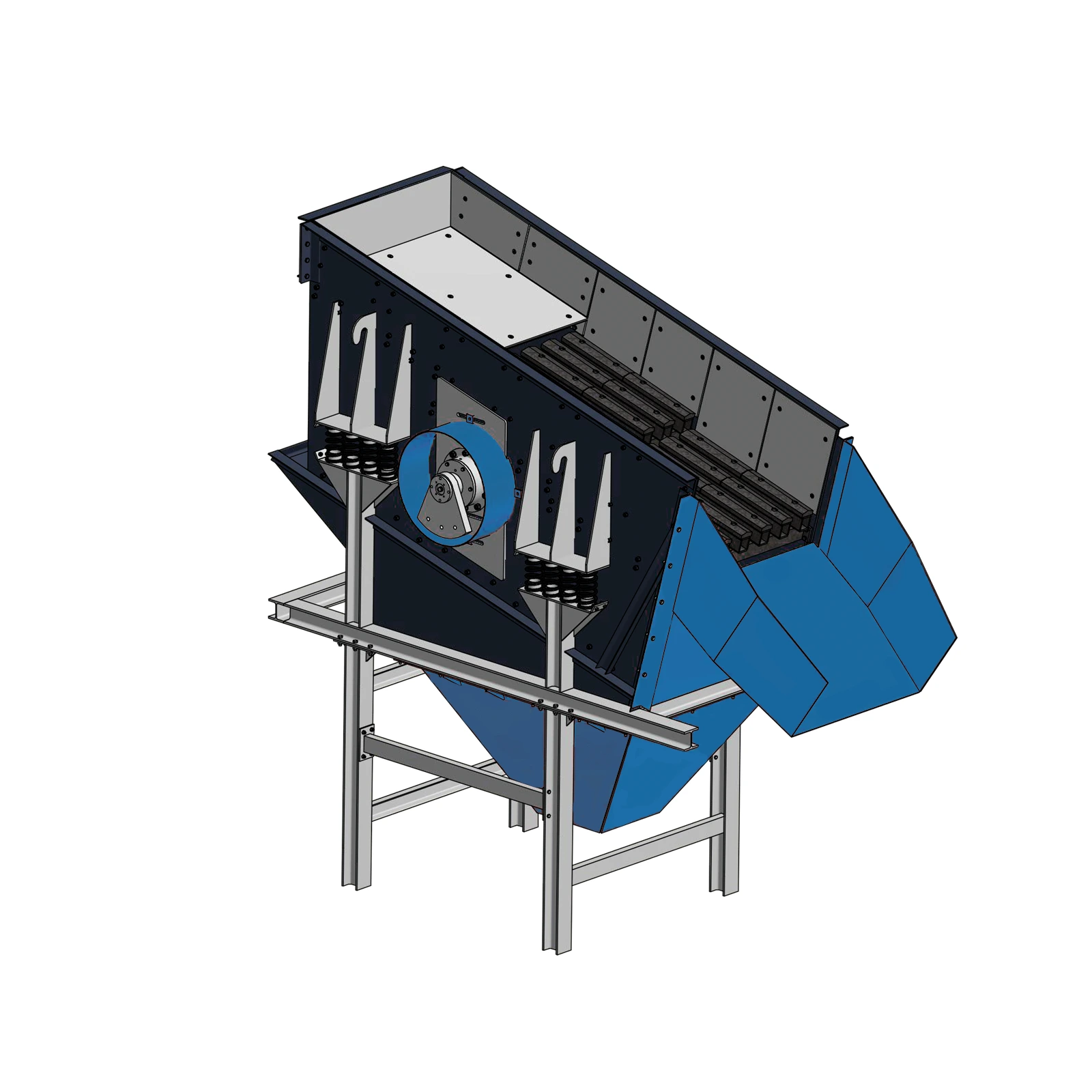
The feeder is the first machine in a crushing plant. It takes rock from the hopper or truck and delivers it evenly to the crusher. The right feeder keeps the crusher running full and stops its capacity being wasted on soil and fines.
This guide compares the main crusher feeder types, the vibrating grizzly feeder, heavy-duty vibrating feeder, apron feeder and horizontal feeder, and the tool on this page helps you pick the right one.
In a nutshell
- What a feeder does: feeds the crusher evenly and, with a grizzly, scalps out soil and fines.
- Grizzly feeder: the most common feeder before a jaw crusher; 150–300 t/h.
- Heavy-duty vibrating feeder: for smaller jaw crushers; 100–180 t/h.
- Apron feeder: for very large, heavy and sticky rock; 200–350 t/h.
- Horizontal feeder: direct truck dumping with a 30–90 t hopper; up to 1000 t/h.
What Is a Crusher Feeder?
A crusher feeder sits between the hopper or truck and the crusher and delivers rock to the crusher opening at a steady rate. Without a feeder, rock enters in surges: sometimes it chokes the opening and sometimes the crusher runs empty. Both cut capacity and increase wear and breakdowns.
A vibrating feeder with spaced separating bars is called a vibrating grizzly feeder; in mining it is also known as a scalping feeder.
Why Does a Crushing Plant Need a Feeder?
Even feeding
A crusher gives the most capacity and the least wear when it is choke-fed evenly.
Scalping fines
Soil and small rock fall through the grizzly bars and don’t waste crusher capacity.
Crusher protection
The impact of truck dumping doesn’t reach the crusher, and the opening is less likely to block.
Plant capacity control
Adjusting speed or stroke sets the feed rate of the whole plant.
Types of Crusher Feeder
Vibrating grizzly feeder
The grizzly feeder is a vibrating feeder with spaced bars at its end. Large rock travels over the bars into the jaw crusher, while soil and fines fall through. It is the most common feeder ahead of a primary crusher. Rockwell Crusher builds two models: GFA-3×1 (150–200 t/h, 11 kW) and GFB-3×1.2 (220–300 t/h, 15 kW).
Heavy-duty vibrating feeder
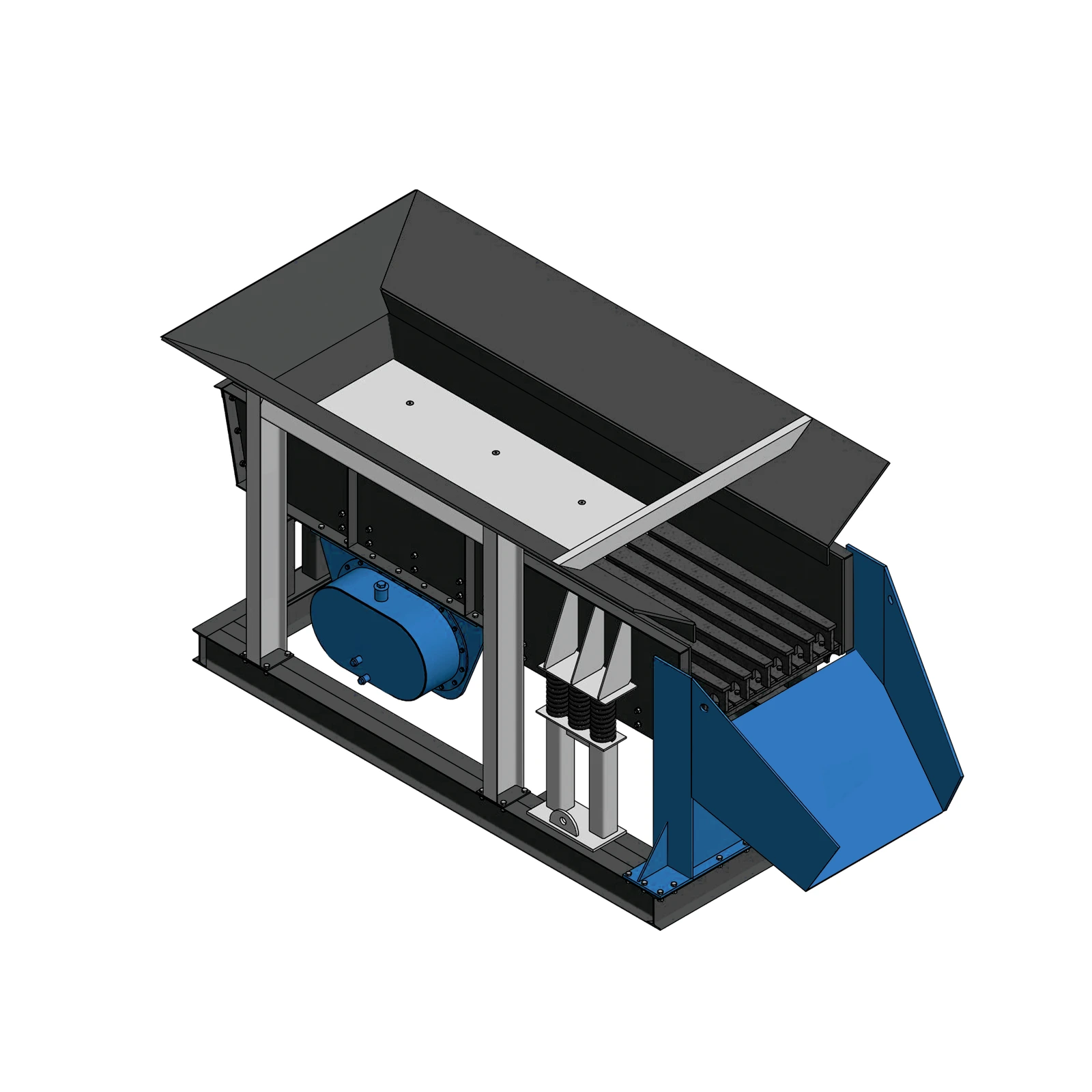
The Rockwell Crusher heavy-duty vibrating feeder has a V-shaped grizzly and is built to feed smaller jaw crushers and remove soil. The HFB-3×1 handles 100–180 t/h with an 11 kW motor.
Apron feeder
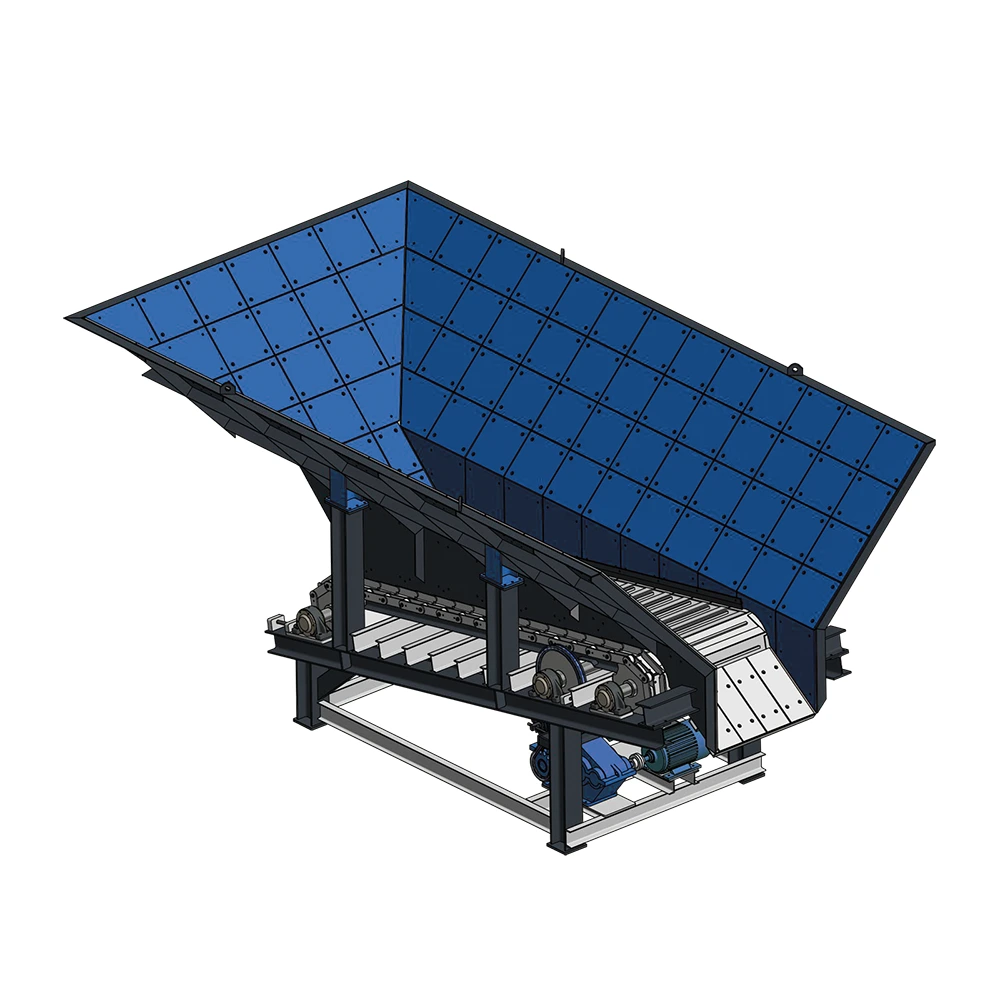
The apron feeder doesn’t vibrate; a chain of heavy steel pans moves rock forward slowly. It is the best choice for very large and heavy rock, sticky material and direct truck dumping with heavy impact, and its feed rate is precisely controllable. The Rockwell Crusher AFA-4×1.2 handles 200–350 t/h with 15 kW at 6.5 m/min.
Horizontal feeder
The horizontal feeder has a large hopper that trucks dump into directly and feeds the primary crusher through a grizzly. It suits high-capacity plants and comes in three models, HFA-100, HFB-120 and HFC-150, for 150 to 1000 t/h.
Rockwell Crusher Feeder Comparison
| Feeder type | Model | Capacity (t/h) | Power (kW) | Best for |
|---|---|---|---|---|
| Grizzly feeder | GFA-3×1 | 150–200 | 11 | Feeding jaw crushers and scalping fines |
| Grizzly feeder | GFB-3×1.2 | 220–300 | 15 | Medium to large plants |
| Heavy-duty vibrating feeder | HFB-3×1 | 100–180 | 11 | Smaller jaw crushers |
| Apron feeder | AFA-4×1.2 | 200–350 | 15 | Very large, heavy and sticky rock |
| Horizontal feeder | HFA-100 | 150–250 | 37 | Direct truck dumping |
| Horizontal feeder | HFB-120 | 300–550 | 45 | High-capacity plants |
| Horizontal feeder | HFC-150 | 450–1000 | 55 | Very high-capacity quarries |
Crusher Feeder Selection Tool
Enter your plant capacity and feed condition to see the right feeder:
How Does a Vibrating Grizzly Feeder Work?
- Receiving rock: a loader or truck dumps run-of-mine rock into the hopper above the feeder.
- Vibration and travel: two vibrator motors or a vibrating gearbox shake the pan at a set angle and the rock moves forward.
- Scalping: on the grizzly section, soil and rock smaller than the bar spacing fall through.
- Feeding the crusher: large rock leaves the end of the feeder and enters the jaw crusher evenly.
How to Choose a Crusher Feeder
- Capacity: choose slightly more than the capacity of the crusher it feeds.
- Width: match the crusher opening so rock doesn’t hang up on the edges. To size the jaw crusher, see our jaw crusher size selection guide.
- Soil and fines: if there is a lot, choose a grizzly feeder or a feeder with a grizzly section.
- Dumping method: with direct truck dumping, apron and horizontal feeders handle impact better.
- Moisture and stickiness: sticky material builds up on vibrating feeders; an apron feeder is safer.
- Wear liners: the pan and sides should have replaceable wear liners.
Feeder Maintenance and Troubleshooting
| Problem | Likely cause | Solution |
|---|---|---|
| Irregular feed or rock stalling | Low stroke or slope, oversize rock jamming | Adjust stroke and angle, control feed size |
| Grizzly bars clogging | Wet, sticky soil | Adjust bar spacing, clean regularly or use an apron feeder |
| Abnormal frame vibration | Loose bolts, broken springs | Tighten fixings and replace springs |
| Hot bearings | Too little or dirty grease | Grease on schedule |
| Pan wear | Dumping impact and abrasive rock | Replace liners and reduce drop height |
Where the Feeder Fits in the Plant
To compare crusher types, see our crusher selection guide and what is a crusher.
Crusher Feeder FAQ
What is a crusher feeder?
What is a vibrating grizzly feeder?
What is the difference between a grizzly feeder and a vibrating feeder?
Where is an apron feeder used?
How do I choose feeder capacity?
Does Rockwell Crusher build its own feeders?
Feeder Selection Advice and Quotation
Tell us your plant capacity, rock type and crusher, and Rockwell Crusher engineers will recommend the right feeder.